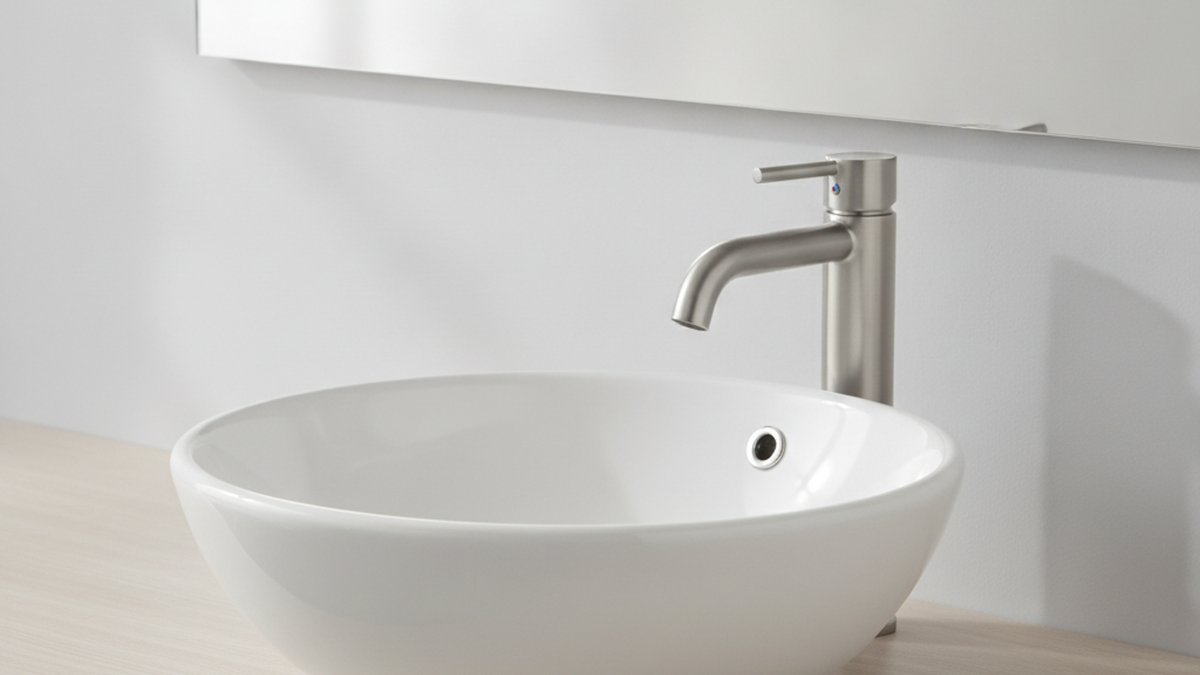
A single hole faucet Kohler makes is a smart pick when you have exactly one mounting hole in your sink or counter and you want a streamlined fixture that installs fast, seals reliably, and won’t drip after a couple of years. Kohler builds most of its single-hole taps around ceramic-disc cartridges and solid brass bodies, which is why they hold up in hard-water homes far better than the bargain zinc faucets you find in big-box clearance bins. The catch is matching the faucet to your actual sink configuration — and knowing which Kohler line fits your budget and your countertop. Let’s break it down the way a plumber friend would over coffee.
What exactly is a single hole faucet, and how do I know Kohler makes one that fits?
A single hole faucet is a tap where the spout and the handle (or handles) mount through one hole in the sink deck or countertop. Kohler makes dozens of them across bathroom and kitchen lines, and nearly all use the industry-standard 1⅜-inch (35 mm) mounting hole, so if your sink already has a single-hole drilling, a Kohler single-hole faucet will almost certainly drop straight in.
Here’s the important distinction people miss. “Single hole” refers to the mounting, not the number of handles. A single-hole faucet can be:
- Single-hole, single-handle — one lever controls both temperature and flow. This is the most common and the easiest to use with wet or soapy hands.
- Single-hole, with an integrated escutcheon — the handle sits beside or on top of the spout but everything passes through one hole.
Compare that to a centerset (three holes, 4 inches apart) or a widespread (three separate holes, 8–16 inches apart). If your sink has three holes and you want the clean single-hole look, don’t panic — most Kohler single-hole faucets ship with an optional deck plate (escutcheon) that covers the two outer holes so you get the minimalist look without redrilling the sink.
To confirm fit, measure two things: the diameter of your existing hole (should be ~1⅜”) and the deck thickness (the mounting hardware on most Kohler models handles counters up to about 1½–2¼” thick). If you’re replacing an old tap, our guide on how to remove an old faucet from a sink without wrecking it walks through freeing corroded nuts before you install the new one.
Which Kohler single hole faucet is best for a small bathroom under $250?
For a small bathroom under $250, the Kohler Purist and Kohler Elliston single-hole lines are the strongest value — both use Kohler’s ceramic-disc valve, come in multiple finishes, and typically land between $180 and $240. The Purist reads modern and architectural; the Elliston is a warmer transitional shape that suits classic vanities.
Small bathrooms reward single-hole faucets specifically because they free up deck space and make a narrow vanity feel less cluttered. A tall “gooseneck” arc looks dramatic but can splash in a shallow basin, so in a compact powder room a mid-height spout (5–7″) is usually the sweet spot. If you’re torn on finish for a traditional-style bathroom, our take on whether a brushed nickel faucet is traditional enough for a classic space covers how each finish reads in a smaller room.
Kohler single hole faucet lines compared: which one for my budget and style?
Here’s a quick side-by-side of popular Kohler single-hole faucets so you can match line to budget and look. Prices are typical 2026 street prices and vary by finish (matte black and brushed brass usually cost the most).
| Kohler line | Type | Typical price | Best for | Valve |
|---|---|---|---|---|
| Elliston | Bathroom, single-handle | $150–$210 | Budget-conscious, transitional look | Ceramic disc |
| Purist | Bathroom, single-handle | $220–$340 | Modern/architectural bathrooms | Ceramic disc |
| Simplice | Kitchen, pull-down | $260–$400 | Everyday kitchen workhorse | Ceramic disc |
| Crue | Kitchen, pull-down | $380–$550 | Designer kitchens, statement look | Ceramic disc |
| Bellera | Kitchen, pull-down | $230–$330 | Traditional kitchens on a budget | Ceramic disc |
Notice every line uses a ceramic-disc valve — that’s the mechanism that determines whether a faucet drips after two years or after fifteen. Ceramic discs seal metal-on-ceramic (actually ceramic-on-ceramic), so they shrug off grit and mineral buildup far better than rubber-washer compression valves. That single spec is the biggest reason people stick with brands like Kohler over unbranded imports.
Do I need a deck plate, and how hard is a single hole faucet to install?
You need a deck plate only if your sink has three holes and you’re installing a single-hole faucet — the plate covers the two you won’t use. Installation itself is genuinely a 45-to-90-minute DIY job for most people, because a single-hole faucet has fewer connections to seal than a widespread.
Here’s the basic sequence for a bathroom single-hole install:
- Shut off both supply valves under the sink and open the old faucet to relieve pressure.
- Disconnect the supply lines and remove the old faucet (loosen the mounting nut from below).
- Clean the deck, then drop in the new faucet — Kohler single-hole models usually pre-attach the supply lines, so you feed them through the single hole.
- From below, slide on the washer and mounting nut and hand-tighten, then snug with a basin wrench. Don’t overtighten — you can crack a ceramic sink.
- Connect supply lines to the shutoff valves, install the pop-up drain if included, then turn the water back on slowly and check for leaks.
Kitchen pull-down models add one step — securing the weight on the pull-down hose so it retracts smoothly — but the deck mounting is identical. If your new tap is a Kohler kitchen model, the same fundamentals in our pull-out kitchen faucet Kohler guide apply to hose routing and spray-head setup.
Is a Kohler single hole faucet worth it over a cheaper brand for hard water?
Yes — in a hard-water home, a Kohler single-hole faucet is usually worth the premium because the ceramic-disc valve and solid-brass waterway resist the mineral scaling that destroys cheaper zinc-bodied faucets within a few years. You’re paying for the internals you can’t see, not just the finish.
That said, “worth it” depends on your water and how long you’ll stay in the home. Here’s the honest breakdown:
- Very hard water (over 10 grains per gallon): A quality ceramic-disc faucet is worth it. Cheap faucets seize and drip fast when minerals crust the valve. You’ll still need to descale the aerator periodically.
- Moderate water, staying 10+ years: Worth it. The warranty and replaceable-cartridge design pay off over time.
- Rental or short-term flip: A mid-tier brand may be the smarter spend — you won’t be around to benefit from the longevity.
Even the best faucet loses pressure if the aerator clogs with mineral flakes. That’s a five-minute fix, not a faucet failure — our walkthrough on cleaning the aerator when water pressure drops keeps any single-hole faucet flowing at full rate. Kohler bathroom faucets are also typically limited to 1.2 gallons per minute (GPM) to meet WaterSense standards, while kitchen models run around 1.5–1.8 GPM, so if your pressure feels low, check the aerator before blaming the tap.
What finish should I choose for a single hole Kohler faucet?
Choose the finish that matches your other bathroom or kitchen hardware first, then your cleaning tolerance second. Kohler’s most popular single-hole finishes are Polished Chrome, Vibrant Brushed Nickel, Matte Black, and Vibrant Brushed Moderne Brass — and each behaves differently day to day.
| Finish | Look | Shows water spots? | Best paired with |
|---|---|---|---|
| Polished Chrome | Bright, classic, timeless | Yes — visible | Almost anything |
| Vibrant Brushed Nickel | Warm, satin, forgiving | Rarely | Traditional & transitional |
| Matte Black | Bold, modern, high-contrast | Shows limescale/dust | Modern & farmhouse |
| Brushed Moderne Brass | Warm gold, on-trend | Rarely | Warm-toned modern |
Kohler’s “Vibrant” finishes are physical-vapor-deposition (PVD) coated, which is far more scratch- and tarnish-resistant than standard electroplating — a real advantage on a faucet you touch dozens of times a day. If you’re weighing whether polished chrome still feels current, our piece on whether a chrome finish is still worth it in 2026 gives the full rundown. Whatever you choose, match the pop-up drain and any accessories to the same finish family so the whole fixture reads as one piece.
Single hole vs. widespread: which should I actually buy?
Buy a single-hole faucet if your sink has one drilling, your basin is compact, or you want a clean modern look and easy cleaning. Buy a widespread if you have a large vanity, three existing holes spread 8″+ apart, and you prefer the classic two-handle, spread-out layout.
The practical trade-offs:
- Single-hole pros: Faster install, fewer leak points, easier to wipe around, more counter space, works one-handed.
- Single-hole cons: One lever means less precise separate hot/cold “styling,” and a large vanity can look a little sparse with a small single tap.
- Widespread pros: Fills a wide deck handsomely, gives separate hot/cold handles some people prefer.
- Widespread cons: Three connection points to seal, pricier, longer install, harder to clean between the pieces.
For most people replacing a bathroom or kitchen faucet in 2026 — especially in a home with a single-hole sink already — the single-hole Kohler is the lower-hassle, lower-leak-risk choice.
How I evaluated these Kohler single hole faucets
Author note: This guide was written by the adeaga fixtures team, drawing on hands-on installs of Kohler bathroom and kitchen faucets across chrome, brushed nickel, and matte black finishes, plus feedback from customers in hard-water regions. adeaga (adeaga.net) specializes exclusively in faucets and bathroom fixtures, so our recommendations stay in our lane — we don’t dabble in general renovation advice.
On credibility and testing: reputable single-hole faucets are certified to ASME A112.18.1/CSA B125.1 for material safety and are typically NSF/ANSI 61 and 372 “lead-free” compliant. WaterSense-labeled bathroom models are independently verified to flow at 1.2 GPM or less while maintaining performance. Kohler backs its residential faucets with a limited lifetime warranty covering leaks, drips, and finish defects — always register your product and keep the receipt, because the warranty is what makes a replaceable-cartridge faucet a long-term value rather than a disposable one.
FAQ
Will a Kohler single hole faucet fit any single-hole sink?
Almost always, yes. Kohler single-hole faucets are built for the standard 1⅜-inch (35 mm) mounting hole used across the industry, and the mounting hardware fits most deck thicknesses up to about 1½–2¼ inches. Measure your hole diameter and deck thickness before buying to be sure, especially on thick stone countertops.
Can I put a single hole Kohler faucet on a three-hole sink?
Yes. Buy a single-hole faucet that includes an optional deck plate (escutcheon), or purchase the matching Kohler deck plate separately. It sits under the faucet and covers the two outer holes, giving you the single-hole look without redrilling or replacing the sink.
Are Kohler single hole faucets hard to install yourself?
No — they’re one of the easier faucet installs because there’s only one deck penetration and fewer connections to seal. Most people finish a bathroom single-hole install in under 90 minutes with a basin wrench and an adjustable wrench. Kitchen pull-down models take a little longer due to the spray hose and weight.
Why is my new single hole faucet leaking or dripping?
A brand-new drip usually means a loose supply-line connection or a mounting nut that isn’t seated, not a faulty valve. Check and snug the connections first. If a Kohler faucet drips from the spout after years of use, the ceramic cartridge is worn and can be replaced under the lifetime warranty rather than swapping the whole faucet.
What’s the difference between the Kohler Purist and Elliston single hole faucets?
Both are single-hole, single-handle bathroom faucets with ceramic-disc valves, but the Purist has a straight, architectural modern shape and costs more (roughly $220–$340), while the Elliston has a softer transitional curve and is more budget-friendly (roughly $150–$210). Choose Purist for contemporary bathrooms and Elliston for classic or transitional vanities on a tighter budget.
Do Kohler single hole kitchen faucets come with a deck plate too?
Many do. Kohler kitchen pull-down models like the Simplice and Bellera typically include an optional escutcheon so you can install them on a single hole or cover a three-hole sink. Check the spec sheet — if a deck plate is included, it’ll be listed under “escutcheon” in the box contents.