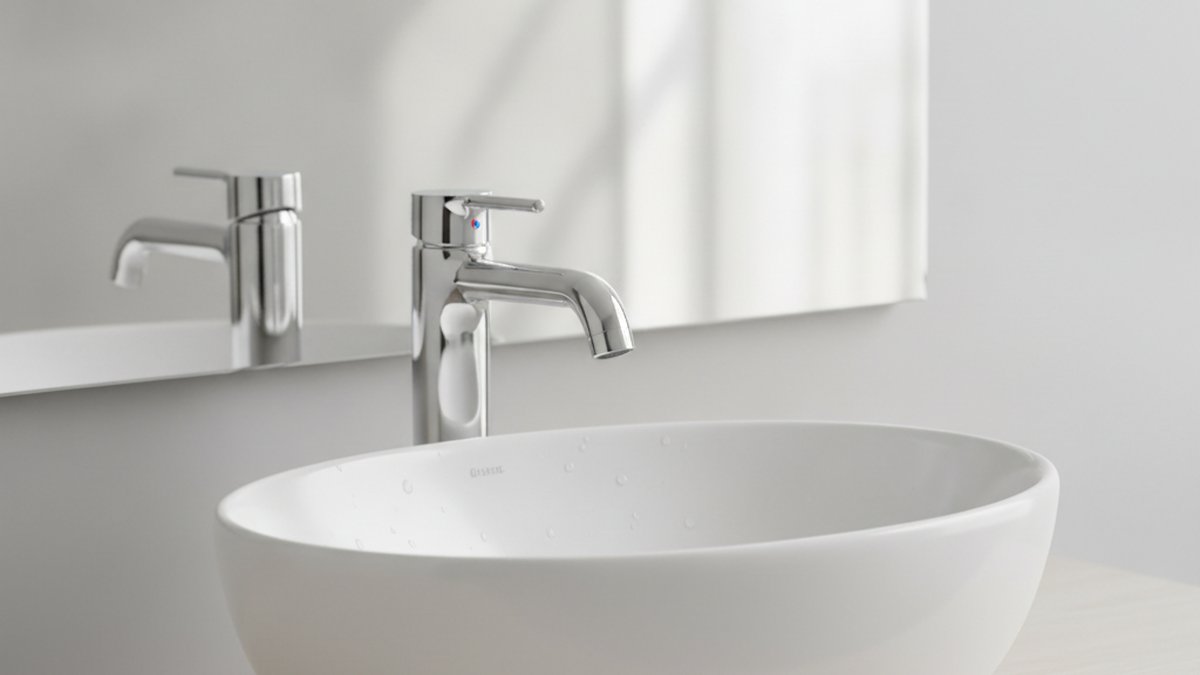
If you’ve ever stood in a hardware aisle wondering whether that shiny chrome in faucet form is a safe choice or a dated one, here’s the honest answer: chrome is a chrome-plated finish (usually chromium electroplated over brass or zinc) that has been the default faucet finish for decades precisely because it works. It’s hard, it’s cheap, it doesn’t rust, and it goes with everything. In this guide we’ll walk through what chrome actually is, how it compares to brushed nickel and matte black, whether it looks dated, how to keep it spot-free, and how to pick the right chrome faucet for your kitchen or bathroom without overpaying.
At adeaga, we sell and test faucets across every finish, and chrome remains our top-recommended choice for buyers who want maximum durability per dollar. Let’s get into the real questions people ask.
What exactly is a “chrome” finish in a faucet — is it solid metal or a coating?
Chrome is a thin layer of chromium electroplated over a base metal — it is a coating, not solid chrome. Under that mirror-bright surface is almost always solid brass or, on budget models, zinc alloy (sometimes called “pot metal”). The chromium layer is what gives you the hardness, the shine, and the corrosion resistance; the brass or zinc underneath is what gives the faucet its weight and structural strength.
This matters more than most shoppers realize. Two faucets can both say “polished chrome” on the box and perform completely differently, because the plating process and base metal differ. A quality chrome faucet uses a multi-layer plating stack — typically copper, then nickel, then chromium — over a brass body. That nickel underlayer is the unsung hero: it’s what actually blocks corrosion and gives the chrome its long-term durability. Cheap faucets skip layers or plate directly over zinc, which is why a $25 chrome faucet can start pitting or peeling in two years while a well-made one looks new after fifteen.
Two chrome sub-finishes exist:
- Polished chrome — the classic bright, mirror-like, highly reflective look. Most common and most affordable.
- Brushed (satin) chrome — chrome given a matte, lightly textured surface that hides water spots and fingerprints. Less shiny, slightly more expensive, less common than brushed nickel.
When people say “chrome faucet,” they almost always mean polished chrome unless stated otherwise.
Is a chrome faucet dated in 2026, or does it still look current?
Chrome is not dated — it’s neutral, which is exactly why it never fully goes out of style. In 2026, matte black and warm brass are the trend-driven “statement” finishes, but chrome remains the safe, timeless default that resells well and doesn’t lock you into a look you’ll regret in five years.
Here’s the design reality: trends cycle, but chrome is the “white t-shirt” of faucet finishes. It reads clean and modern in a minimalist bathroom, crisp and classic in a traditional one, and utilitarian-tough in a busy kitchen. Because it’s cool-toned and neutral, it doesn’t fight with your countertop, tile, cabinet color, or hardware the way a strong finish like champagne bronze or matte black can.
Where chrome can look dated is only in very specific “warm” design schemes — think heavy wood tones, brass lighting, and earthy palettes — where a cool mirror finish feels a little cold. If your whole room leans warm and moody, a brushed nickel or bronze may harmonize better. If you’re mixing finishes or you want the lowest-risk choice, chrome is still the answer. If you’re weighing warmer alternatives, our breakdown of whether a brushed nickel faucet is traditional enough for a classic bathroom or kitchen is a useful companion read, and the same logic applies to a matte black faucet if you’re chasing the bolder end of the spectrum.
Chrome vs brushed nickel vs matte black: which finish should I actually buy?
Buy chrome if you want the cheapest durable finish and don’t mind occasional wiping; buy brushed nickel if you want to hide water spots and fingerprints in a warmer tone; buy matte black if you want a bold modern statement and will commit to careful cleaning. Here’s how they stack up on the factors that actually matter day to day.
| Factor | Polished Chrome | Brushed Nickel | Matte Black |
|---|---|---|---|
| Typical price | $ (lowest) | $$ | $$–$$$ |
| Durability / corrosion resistance | Excellent | Excellent | Very good (coating-dependent) |
| Hides water spots | Poor — shows spots | Good | Fair |
| Hides fingerprints | Poor | Very good | Fair |
| Cleaning effort | Low but frequent | Low | Higher (needs gentle care) |
| Matches other fixtures | Everything | Warm-neutral | Modern only |
| Resale / timelessness | Highest | High | Trend-dependent |
| Tone | Cool, bright | Warm, soft | Bold, cool |
The short version: chrome wins on price, durability, and versatility. Brushed nickel wins on low-maintenance appearance. Matte black wins on style impact. For a high-traffic kitchen sink or a rental you want to keep looking sharp with minimal cost, chrome is usually the right call. For a spa-like primary bathroom where you don’t want to see a single water spot, brushed nickel edges it out.
Does a chrome faucet show water spots and fingerprints — and how do I keep it clean?
Yes, polished chrome shows water spots and fingerprints more than any other finish because its mirror surface reflects every mark — but it’s also the easiest finish to clean, and a quick daily wipe with a dry microfiber cloth keeps it flawless. The visibility is the trade-off for the shine; the good news is nothing sticks to chrome permanently if you handle it right.
Here’s the maintenance routine that actually works on chrome:
- Daily: Wipe the faucet dry with a soft microfiber cloth after heavy use. Ninety percent of “spots” are just dried mineral residue from water sitting on the surface.
- Weekly: Clean with a few drops of dish soap in warm water, rinse, and buff dry. That’s it — no special cleaner needed.
- Hard-water spots: Use a 50/50 white vinegar and water solution. Dampen a cloth (don’t spray directly onto valves), wipe, let it sit a minute on stubborn spots, then rinse and dry.
- Never use: abrasive pads, scouring powder, bleach, or ammonia-heavy cleaners. These scratch or dull the chromium layer over time.
If your home has hard water, mineral buildup will also clog the aerator long before it hurts the finish — you’ll notice weak or splitting flow. That’s a five-minute fix, not a faucet replacement; our guides on cleaning the aerator in your faucet when water pressure drops and cleaning a faucet aerator that won’t come off walk you through it. The same vinegar-soak trick that de-spots your chrome will de-scale your aerator.
One caution specific to chrome: never scrub with a “magic eraser” style melamine sponge on a daily basis. It works, but it’s mildly abrasive and, used repeatedly, can micro-scratch polished chrome into a hazy dullness. Save it for genuinely stuck grime, not routine cleaning.
Will a chrome faucet last, or will the finish peel and pit over time?
A quality chrome faucet with a brass body and multi-layer plating will easily last 15–20 years without peeling or pitting; a cheap chrome-over-zinc faucet may start flaking within 2–5 years. The finish’s lifespan is almost entirely determined by what’s under the chrome, not the chrome itself.
Chromium is one of the hardest platings you can put on a faucet — harder than nickel, harder than most colored PVD coatings. That’s why chrome resists scratching and corrosion so well. Peeling and pitting are almost never a chrome problem; they’re a base-metal-and-plating problem. When you see a chrome faucet with bubbling or flaking around the base, what actually happened is that moisture reached the zinc underneath through a thin or porous plating layer and corroded it from the inside out, pushing the chrome off.
To buy chrome that lasts, look for these signals:
- Solid brass construction stated on the spec sheet (not “zinc alloy” or “metal”).
- Ceramic disc cartridge — the internal valve that controls water; ceramic outlasts rubber-and-plastic designs by years.
- Compliance and certification: look for cUPC/NSF certification and NSF/ANSI 61 and NSF/ANSI 372 (lead-free) compliance, which govern drinking-water safety, plus ASME A112.18.1 / CSA B125.1 for faucet performance and durability.
- A real warranty: reputable brands back chrome finishes with a limited lifetime finish-and-function warranty for residential use. If a faucet only carries a 1-year warranty, that tells you what the maker expects.
At adeaga, every chrome faucet we list is spec’d to solid brass with certified lead-free waterways and is finish-tested for adhesion and corrosion resistance before it goes on the site. A good finish should outlive the cartridge — and a worn cartridge is a cheap swap, not a reason to replace the whole faucet.
Is a chrome faucet good for hard water and busy kitchens?
Chrome is an excellent choice for hard water and busy kitchens because the finish itself is chemically inert and won’t corrode from mineral-heavy water — the only downside is cosmetic water spotting, which wipes away easily. Hard water won’t damage chrome; it just leaves visible calcium and magnesium deposits on the surface that a vinegar wipe removes.
For a hardworking kitchen, chrome has three practical advantages. First, it hides scratches better than dark finishes because its bright reflectivity camouflages fine marks. Second, it doesn’t stain from coffee, wine, tomato, or grease the way lighter or matte finishes can. Third, it’s cheap enough that even a heavily used kitchen faucet is affordable to replace if you eventually want a new style — you’re not sinking $400 into a finish.
The one thing to pair with a chrome kitchen faucet in a hard-water home is a decent aerator and, ideally, a spray head with silicone nozzles you can rub clean. Mineral buildup targets the flow path far sooner than the finish. If your water is very hard, budget for a periodic aerator de-scale and consider a whole-home or under-sink softening/filter setup — worthwhile regardless of finish.
How much should I spend on a chrome faucet — and where’s the value sweet spot?
For a chrome faucet that lasts, the value sweet spot is roughly $60–$150 for a bathroom faucet and $120–$250 for a kitchen faucet — enough to guarantee solid brass and a ceramic cartridge without paying a premium for a designer name. Below that range you’re gambling on zinc bodies and thin plating; above it, you’re mostly paying for brand, style, and features, not better chrome.
Think about it in three tiers:
- Under $50: Usually chrome-over-zinc with rubber-seal or basic cartridges. Fine for a rarely used guest bath or a short-term rental. Don’t expect 15 years.
- $60–$250 (the sweet spot): Solid brass, ceramic disc cartridge, certified lead-free, real warranty. This is where chrome delivers its legendary durability-per-dollar. Most buyers should shop here.
- $250+: Premium brands, advanced spray/pull-down mechanisms, touchless tech, designer styling. The chrome itself isn’t dramatically better — you’re paying for engineering and name.
Because chrome is the industry’s baseline finish, the exact same faucet model almost always costs less in chrome than in brushed nickel, matte black, or bronze — often $20–$60 less. That’s a genuine reason to choose chrome: you get the same body, cartridge, and warranty for less money simply by picking the least “premium” finish.
FAQ
Is chrome or brushed nickel easier to keep clean?
Brushed nickel is easier to keep looking clean because its satin texture hides water spots and fingerprints, so it needs less frequent wiping. But polished chrome is technically easier to actually clean — nothing sticks to it, and a quick wipe restores a perfect shine. If you don’t want to wipe daily, choose brushed nickel; if you don’t mind a quick buff and want the lowest price, choose chrome.
Does chrome plating contain lead or make water unsafe?
No. The chromium plating on the outside doesn’t touch your drinking water, and any faucet sold for potable use in North America must meet NSF/ANSI 372 low-lead requirements for the internal waterways. Look for “lead-free” and cUPC/NSF certification on the box. A certified chrome faucet is completely safe for drinking water.
Can you mix a chrome faucet with other finishes in the same bathroom?
Yes, and it often looks intentional and modern. Because chrome is cool-toned and neutral, it pairs cleanly with polished nickel, stainless, and even matte black hardware. The classic move is to keep your faucet and shower fixtures in the same finish (chrome) while allowing towel bars, mirrors, or lighting to differ. Just avoid clashing warm and cool metals right next to each other on the same fixture.
Why does my chrome faucet look cloudy or hazy instead of shiny?
Cloudiness on chrome is almost always mineral film from hard water or residue from the wrong cleaner — not damaged plating. Wipe it with a 50/50 white vinegar-and-water solution, rinse, and buff dry with microfiber, and the shine usually returns instantly. If the haze doesn’t clear, it may be micro-scratching from abrasive cleaning, which is permanent — so switch to soap and water going forward.
Is polished chrome or brushed chrome better for a bathroom?
Polished chrome is better if you want a bright, classic, budget-friendly look and don’t mind occasional spot-wiping. Brushed chrome is better if you want a softer, matte appearance that hides fingerprints and water marks. Polished is far more common and cheaper; brushed chrome can be harder to find and usually costs a bit more, and many buyers choose brushed nickel instead for a similar low-maintenance satin effect.
How long does a good chrome faucet last before it needs replacing?
A quality chrome faucet with a solid brass body and ceramic cartridge typically lasts 15–20 years or more. When issues arise, it’s usually a worn cartridge causing drips — a $10–$30 part you can replace yourself — not a failed finish. The chrome itself will generally outlast the internal components, so budget-tier chrome-over-zinc models are the main exception, often failing within 2–5 years.
Author note: This guide was written by the adeaga fixtures team, drawing on hands-on finish-adhesion and corrosion testing across dozens of chrome, nickel, and matte-black faucets, plus real customer feedback on how each finish holds up in hard-water and high-traffic homes. adeaga has been helping homeowners choose and maintain faucets and bathroom fixtures for over a decade, and we recommend chrome the same way we’d recommend it to a friend: it’s the safe, durable, sensible choice for most people. Always verify a specific model’s certifications (NSF/ANSI 61, 372, ASME A112.18.1) and warranty before you buy.