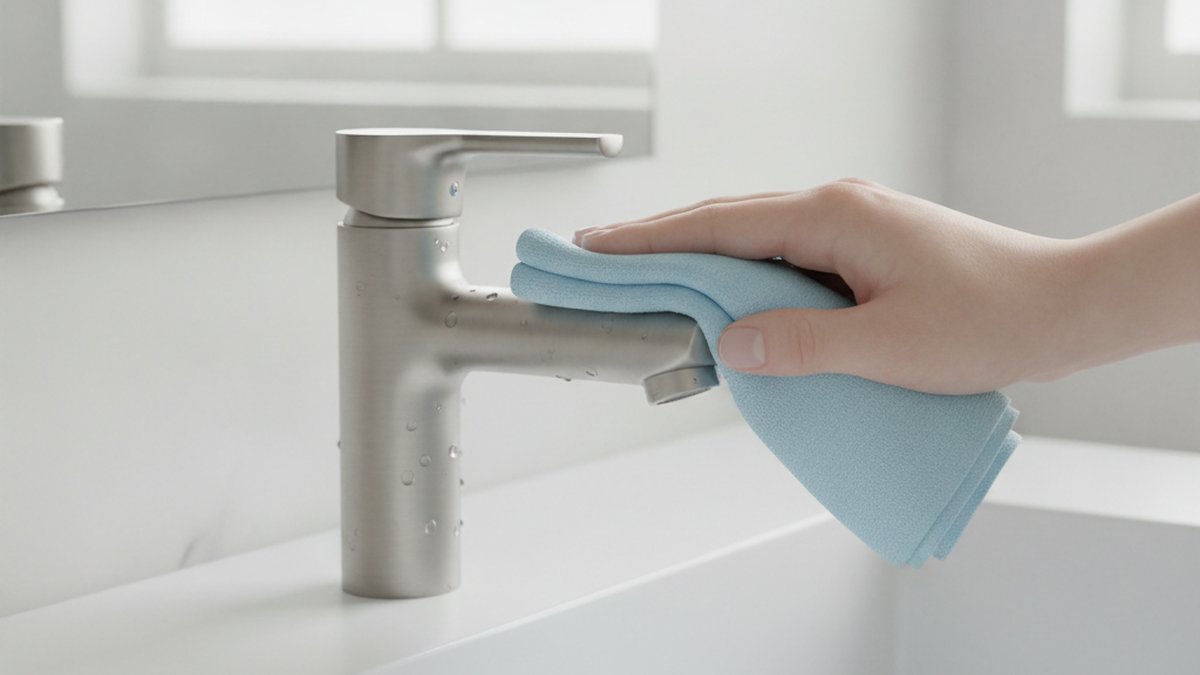
If you’ve been wondering exactly how to clean nickel faucets so they keep that soft, warm glow instead of turning cloudy and streaky, you’re in the right place. Nickel is one of the most popular faucet finishes in American bathrooms and kitchens — it hides water spots better than chrome and looks more expensive — but it’s also finicky about what you clean it with. Get it right and it looks new for a decade. Get it wrong with the wrong spray or a scrubby sponge, and you can permanently haze the surface in a single afternoon. This guide walks you through the safe, tested method for both brushed and polished nickel, plus the mistakes that quietly wreck the finish.
At adeaga, we sell and stress-test faucet finishes for a living, so most of what follows comes from real product testing and manufacturer care guidelines — not guesswork.
What’s the safest everyday way to clean a nickel faucet?
The safest everyday method is warm water on a soft microfiber cloth, followed by a dry buff — nothing else needed most days. Nickel doesn’t need a specialty cleaner for routine maintenance; the enemy isn’t dirt, it’s mineral-laden water sitting on the surface and drying into spots. So the single most valuable habit is drying the faucet after use, not scrubbing it harder later.
Here’s the routine we recommend to customers, and it takes about 30 seconds:
- Wipe the whole faucet — spout, handle, base — with a damp microfiber cloth.
- If there’s any greasy film (common on kitchen faucets), add one drop of mild dish soap to the cloth, not directly on the metal.
- Rinse the cloth and wipe again to remove soap residue.
- Buff completely dry with a second, dry microfiber cloth.
That last step is the one everyone skips, and it’s the one that matters most. Air-drying is what leaves the white, chalky spots you see on neglected faucets. If you do only one thing differently after reading this, dry the faucet every time.
Is there a difference between cleaning brushed nickel and polished nickel?
Yes — the cleaner is the same, but the technique differs slightly. Brushed nickel (also called satin nickel) has a fine directional grain, so you should always wipe with the grain, not in circles, to avoid creating visible swirl marks over time. Polished nickel is mirror-smooth and shows fingerprints and streaks far more readily, so it rewards more frequent buffing and a truly lint-free cloth.
If you’re still deciding between finishes or want to understand how nickel reads in a more traditional space, our guide on whether a brushed nickel faucet is traditional enough for a classic bathroom or kitchen breaks down the look and upkeep side by side.
How do I remove hard water spots and limescale from a nickel faucet?
To remove hard water spots from nickel, dampen a cloth with a 50/50 mix of white vinegar and warm water, lay it over the spotted area for a few minutes, then wipe, rinse, and dry — do not spray vinegar directly onto the faucet or let it soak. Vinegar is mildly acidic, which dissolves the calcium and magnesium deposits that cause spotting, but prolonged contact can attack the finish and any exposed seals, so contact time and thorough rinsing are everything.
For heavier limescale — the crusty buildup you get in hard-water regions — the technique changes a little:
- Light spots: Wipe with the vinegar-water cloth, rinse, dry. Done in a minute.
- Moderate buildup: Soak a cloth or paper towel in the vinegar solution, drape it over the deposit for 5–10 minutes (no longer), then wipe with the grain and rinse thoroughly.
- Around the aerator tip: Deposits love to clog the aerator screen and choke your flow. Rather than soaking the whole faucet, unscrew and clean that part separately — our walkthrough on cleaning the aerator when water pressure drops shows exactly how.
A quick warning: many people reach for a commercial descaler like CLR for stubborn buildup. CLR works, but it is aggressive and is not recommended for all nickel finishes — especially brushed nickel and any coated PVD nickel. If you go that route, spot-test first and follow the timing to the second; see our dedicated guide on cleaning a faucet head with CLR before you pour anything.
Why does my nickel faucet keep getting cloudy no matter how much I clean it?
If your nickel faucet keeps clouding over, the problem is almost always your water, not your cleaning — you have hard water leaving mineral film faster than you’re drying it off. The fix is prevention: dry after each use, and consider a whole-home or under-sink water treatment if spotting is relentless. Cloudiness can also be the early sign of finish damage from a harsh cleaner, which unfortunately can’t be reversed once the surface layer is etched.
One thing worth checking is your actual water hardness. If your home runs above roughly 7 grains per gallon (120 mg/L), you’re in hard-water territory and every fixture will spot quickly. Understanding your water can also change what comes out of the tap — our comparison of tap water vs filtered water from your kitchen faucet is a useful companion read if hard water is a running battle in your home.
What should I never use on a nickel faucet?
Never use abrasive scrubbers, bleach, ammonia, or acidic bathroom cleaners on nickel — any of these can permanently dull, discolor, or pit the finish. Nickel’s good looks come from a thin surface layer, and once that’s scratched or chemically etched, no amount of polishing brings it back. This is the section to read twice, because damage here is not repairable.
Here’s the do-not-use list we give every customer, and why each one is a problem:
| Cleaner / Tool | Why people reach for it | What it does to nickel | Verdict |
|---|---|---|---|
| Microfiber + warm water | Everyday wiping | Nothing bad — safe daily | ✅ Best choice |
| Mild dish soap | Cuts grease film | Safe when diluted and rinsed | ✅ Safe |
| 50/50 white vinegar + water | Dissolves hard water spots | Safe with short contact + rinse; risky if soaked | ⚠️ Use carefully |
| Bleach or ammonia (incl. glass cleaner with ammonia) | “Disinfecting,” shine | Discolors and corrodes the finish | ❌ Never |
| Abrasive pads, steel wool, “magic” erasers | Scrubbing off buildup | Scratches and dulls the surface permanently | ❌ Never |
| Acidic tub/tile cleaners | Heavy-duty descaling | Etches and hazes nickel | ❌ Never |
Notice that melamine “magic eraser” sponges are on the never list. They feel soft but are essentially ultra-fine sandpaper, and they will slowly abrade brushed nickel’s grain and mirror-polish nickel’s shine. They’re one of the most common ways well-meaning people damage a faucet.
Can I use glass cleaner or an all-purpose spray on nickel?
Only if it’s ammonia-free and alcohol-free — and even then, spray it onto the cloth, never onto the faucet. Overspray drips into seams, seats around the base, and works its way toward internal cartridges and gaskets, where harsh chemicals shorten the life of the seals. Most streaky “why won’t it shine” complaints come from ammonia-based glass cleaners, so read the label before it touches nickel.
How do I keep a nickel faucet shiny long-term?
To keep nickel shiny long-term, dry it after use, do a vinegar-water spot treatment only when needed, and apply a thin coat of car wax or a dedicated metal-safe wax two or three times a year to shed water. That wax layer is the trick professionals use — it makes water bead and roll off instead of drying into spots, so your daily upkeep drops to almost nothing.
A realistic maintenance schedule looks like this:
- Daily: Quick wipe and dry after heavy use (mornings/evenings in the bathroom, after dishes in the kitchen).
- Weekly: Warm water and a drop of dish soap, then buff dry.
- Monthly: Vinegar-water spot treatment on any spots that have crept in.
- Every 3–4 months: A thin coat of paste wax buffed to a shine for water repellency.
One more long-term tip: watch what else lives on your faucet. Bar soap residue, toothpaste splatter, and abrasive powdered cleansers left on the deck all migrate onto the finish. Keeping the surrounding sink area clean does more for your faucet than any single product.
Does the same routine work for a nickel shower head or tub filler?
Yes — the exact same rules apply to nickel shower heads, tub fillers, and bathroom accessories: soft cloth, no abrasives, vinegar only for spots, always dry. The one addition for shower heads is the nozzles, which clog with limescale and spray sideways when they do. For those, soak a bag of vinegar solution around the nozzle face (not the whole fixture), then wipe and rinse. If you’re pairing a nickel finish across a full bathroom, matching your shower fixtures matters too — our overview of shower faucet fittings and which ones you actually need helps you keep the look consistent.
Is PVD or “lifetime finish” nickel easier to clean?
Yes — PVD (physical vapor deposition) nickel is significantly more durable and easier to clean than older electroplated nickel, because the finish is fused to the metal at a molecular level and resists scratching, tarnishing, and chemical etching. If you’re buying new, a PVD or “lifetime finish” nickel faucet is worth the small premium precisely because it forgives cleaning mistakes that would ruin a standard finish.
That said, “more forgiving” doesn’t mean “abuse-proof.” Even PVD finishes should never see steel wool or acidic cleaners; the coating is hard, but the underlying rules still apply. The real advantage shows up over years — PVD nickel keeps its color and doesn’t develop the dull yellowish cast that older plated nickel sometimes does. When comparing faucets, check the spec sheet or product page for the words “PVD” or “physical vapor deposition,” and confirm the finish is covered by a lifetime finish warranty, which most reputable brands offer on quality nickel.
How often should I actually be cleaning it?
For most households, a proper wipe-and-dry after heavy use plus a weekly soap clean is plenty; monthly spot treatment handles hard water. Kitchen faucets need more attention than bathroom ones because of grease and food splatter, and homes with hard water need more frequent drying than those with soft water. The goal isn’t constant scrubbing — it’s staying ahead of mineral buildup so you never have to scrub at all.
FAQ
Can I use vinegar to clean nickel faucets safely?
Yes, but only diluted (50/50 with water), applied to a cloth, with short contact time and a thorough rinse afterward. Vinegar dissolves hard water spots effectively, but leaving it on too long or using it undiluted can dull the finish and degrade internal seals. Rinse with plain water and dry immediately after every vinegar treatment.
Will Windex or glass cleaner ruin a nickel faucet?
Ammonia-based glass cleaners like traditional Windex can discolor and streak nickel over time, so avoid them. If you want that glass-cleaner shine, use an ammonia-free, alcohol-free formula and spray it onto a microfiber cloth rather than directly onto the faucet, then buff dry. Warm water and a dry cloth genuinely work just as well for daily shine.
How do I get rid of white spots on my brushed nickel faucet?
Those white spots are dried mineral deposits from hard water. Wipe them with a cloth dampened in 50/50 white vinegar and water, moving with the grain, then rinse and dry. To stop them coming back, dry the faucet after each use and apply a thin coat of paste wax every few months so water beads off instead of drying on.
Is it safe to use a Magic Eraser on nickel?
No. Melamine “magic eraser” sponges are mildly abrasive and will scratch and dull both brushed and polished nickel, even though they feel soft. Once the surface is abraded, the damage is permanent. Stick to microfiber cloths and let vinegar or dish soap do the chemical work instead of scrubbing.
Why does my nickel faucet look yellow or discolored?
A yellowish cast usually means either chemical damage from a harsh cleaner (bleach, ammonia, or acidic products) or, on older electroplated nickel, natural aging of the finish. Damage from cleaners can’t be reversed. If the discoloration is just surface film, try a gentle dish-soap clean and dry; if it’s in the finish itself, it’s likely time to consider a replacement — and a PVD finish next time will resist this.
Do I need a special commercial nickel cleaner?
No. For everyday care, warm water, mild dish soap, and diluted white vinegar handle everything nickel needs. Specialty metal cleaners are rarely necessary and some are too aggressive for the finish. When in doubt, choose the gentlest option and always check your faucet manufacturer’s care guidelines, which almost always recommend exactly this simple approach.
Author note: This guide was written by the adeaga fixtures team, drawing on hands-on finish testing and manufacturer care specifications for nickel, brushed nickel, and PVD faucets. adeaga has spent years helping homeowners choose and maintain faucets and bathroom fixtures, and we base our care advice on real product testing and the warranty guidelines the leading finish makers publish — not internet folklore. Quality nickel faucets from reputable brands typically carry a lifetime finish warranty; if a cleaning-related issue ever arises, check your warranty terms before assuming the fixture needs replacing.