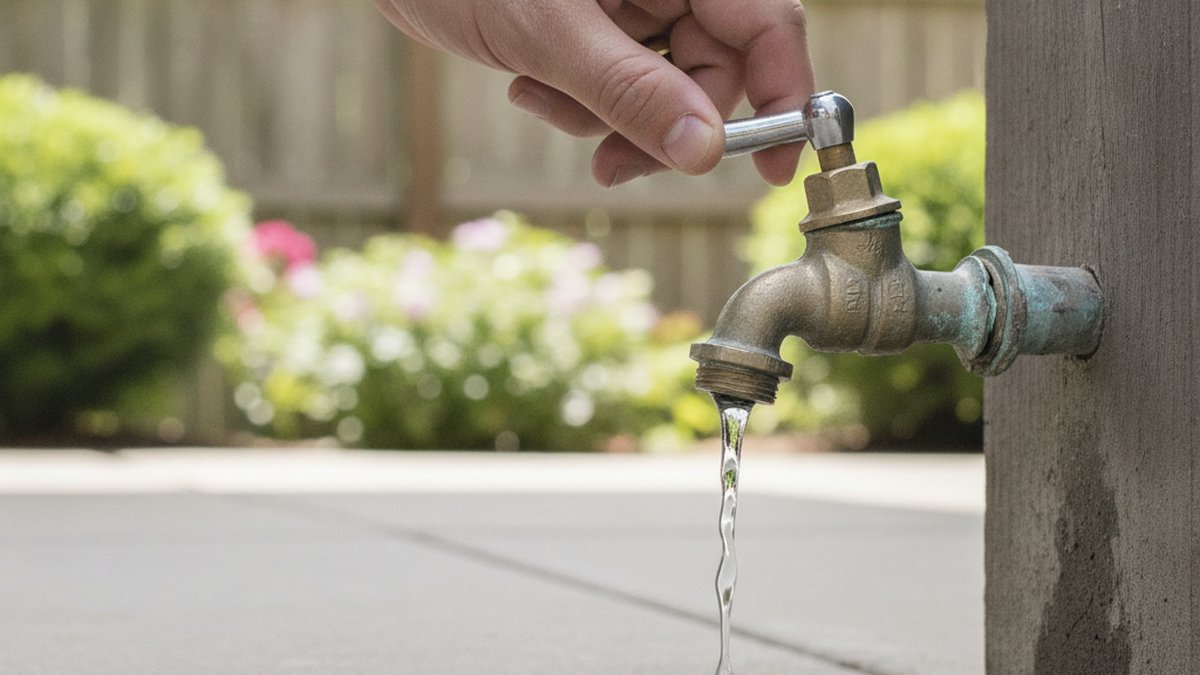
When your outdoor faucet keeps spinning, it means the handle has lost its mechanical connection to the valve stem inside — so turning it no longer opens or closes the water. It’s one of the most common outdoor plumbing complaints, and the good news is that a spinning hose bib (that’s the technical name for the outdoor faucet on the side of your house) is usually a cheap, quick fix rather than a plumbing emergency. Below, we’ll walk through exactly why it happens, how to diagnose which part failed, and how to repair it yourself — the same way our product team at Adeaga tests and troubleshoots every spigot we sell.
Why does my outdoor faucet handle spin freely and never stop the water?
A handle that spins freely means the connection between the handle and the internal valve stem has failed. The handle is turning, but the stem it’s supposed to grip is either stripped, disconnected, or broken — so nothing moves the rubber washer that seals off the water.
Think of a standard compression hose bib like a screw. When it works, turning the handle screws a stem down onto a washer, and that washer presses against the seat to stop the flow. When the outdoor faucet keeps spinning, that “screw” mechanism has stripped out — the threads are gone, the handle set screw has loosened, or the stem has snapped. There are really only four culprits, and you can usually narrow it down in a minute or two:
- Loose or missing handle screw: The single screw on top of the handle backed out, so the handle spins on the stem square. Easiest fix of all.
- Stripped handle broaching (the square hole): The square opening in the handle rounded out, so it can’t grip the square tip of the stem.
- Worn packing nut / packing washer: The nut behind the handle loosened, letting the stem wobble or spin without seating.
- Broken or stripped valve stem: The brass stem threads inside the faucet body wore out or the stem sheared — the handle turns but the stem stays put.
How do I tell which part is actually broken before I buy anything?
Start by looking at the handle screw and the packing nut — if those are tight and the handle still spins, the stem itself is stripped and needs replacement. You can diagnose the whole thing in about five minutes without special tools.
Here’s the sequence we recommend. Work top to bottom, because the fixes get progressively more involved:
- Check the handle screw. Look at the very top center of the handle. Is there a screw, and is it loose or missing? Snug it down with a screwdriver and test. If the handle now grips and controls water, you’re done — that was a two-minute fix.
- Wiggle the handle up and down. If the handle lifts and rattles, the packing nut behind it has loosened. Tighten that nut (see below) and retest.
- Pull the handle off and inspect the square hole. Remove the handle screw and slide the handle off. Look at the square broaching inside the handle and the square tip of the stem. If either is rounded instead of crisp-cornered, that part is stripped.
- Turn the exposed stem tip with pliers. If gripping the stem directly with pliers does control the water, your handle is the problem (cheap). If turning the stem does nothing, the stem or its internal threads are shot (also cheap, just more steps).
Is it the handle or the valve stem inside? (The two most common causes)
If the handle spins but the exposed stem still shuts off water when you grip it with pliers, replace the handle; if the stem itself won’t move or spins loosely, replace the stem. Those are the two scenarios you’ll land in about 90% of the time, and each has a different fix and cost.
| Symptom | Likely cause | Fix | Typical part cost | Time |
|---|---|---|---|---|
| Handle spins, screw loose/missing | Backed-out handle screw | Tighten or replace screw | $1–$3 | 2 min |
| Handle spins, square hole rounded | Stripped handle broaching | New handle | $6–$15 | 10 min |
| Handle wobbles/lifts, water seeps | Loose packing nut/washer | Tighten nut or replace packing | $3–$8 | 10 min |
| Handle turns, stem doesn’t move | Stripped/broken valve stem | New stem or bonnet assembly | $10–$25 | 25 min |
| Everything spins, body cracked (freeze damage) | Cracked faucet body | Replace whole hose bib / frost-free sillcock | $18–$45 | 60 min |
How do I fix an outdoor faucet that keeps spinning, step by step?
Shut off the water to the faucet, remove the handle, replace the failed part (screw, handle, packing, or stem), and reassemble — that’s the whole job. Here’s the full walkthrough for a standard compression-style hose bib, which covers the vast majority of homes.
- Turn off the water. Find the shutoff valve that feeds the outdoor line — usually inside the basement, crawlspace, or utility room on the pipe leading to that wall. If you can’t find a dedicated valve, shut off the main. Then open the outdoor faucet to drain any pressure.
- Remove the handle. Unscrew the handle screw on top and pull the handle straight off. If it’s corroded on, wiggle gently or use a handle puller.
- Loosen the packing/bonnet nut. Use an adjustable wrench on the large hex nut behind the handle. Turn counterclockwise. This releases the entire stem assembly.
- Unthread and pull out the stem. Back the stem all the way out. Inspect the square tip, the threads, and the rubber washer at the far end.
- Replace the failed part. If the stem tip or threads are stripped, take the old stem to a hardware store and match it exactly — brands and thread pitches vary. If only the washer is worn, swap the washer and screw. If only the handle stripped, just fit a new handle.
- Reassemble. Wrap the stem threads and packing nut threads with a couple wraps of plumber’s tape, thread the stem back in, tighten the packing nut snug (not gorilla-tight), and refit the handle.
- Restore water and test. Turn the supply back on slowly and check for leaks at the packing nut and spout. Tighten a quarter-turn more if it weeps.
A quick note on tools: the only slightly specialized item is a properly sized adjustable wrench, and many homeowners already own everything else. If you’re building out a basic kit, our guide on what tap installation tools you actually need to fit a faucet yourself covers the short list without the upsells. And if this repair turns into a full swap, the technique in how to remove an old faucet without wrecking it transfers directly to unthreading a stubborn hose bib.
Should I repair the spinning faucet or just replace the whole spigot?
Repair it if the faucet body is solid and only the handle or stem failed — that’s an $8–$25 fix. Replace the whole unit only if the body is cracked (usually from a winter freeze), the threads inside the body are stripped, or you have an old non-frost-free bib you’d rather upgrade.
The deciding factor is almost always the body. Handles and stems are wear parts — they’re supposed to be swapped. The cast body is what you’re really paying for, and as long as it isn’t cracked or corroded through, repairing is the smart, frugal call. If you’re in a climate with hard freezes and you’re already in there, this is a great moment to upgrade to a frost-free sillcock, which places the actual shutoff valve deep inside the heated wall so the exposed part can’t freeze and split. That single upgrade prevents the number-one cause of a whole-faucet failure in cold climates.
One more diagnostic tip: if your outdoor faucet keeps spinning and you noticed it after the first cold snap, suspect freeze damage before you buy a stem. A cracked body will often spin because the internal seat is damaged, and no new stem will fix that.
How do I keep my outdoor faucet from stripping and spinning again?
Don’t over-torque the handle when shutting it off, replace washers at the first sign of a drip, and drain or insulate the faucet before winter. Most spinning-handle failures come from either brute force or freeze damage, and both are preventable.
- Shut off gently. A hose bib only needs the washer to lightly kiss the seat. Cranking it hard is what strips square stems and rounds out handles over time.
- Fix drips early. A dripping outdoor faucet means the washer is failing. Left alone, people crank harder to stop the drip — which strips the stem. If you’re dealing with a drip elsewhere too, the same washer logic in why a faucet washer matters and how to replace one without leaks applies to hose bibs.
- Winterize. Disconnect hoses in fall (a connected hose traps water that freezes and cracks the body), shut off the indoor supply valve, and open the outdoor faucet to drain. Add an inexpensive foam faucet cover for extra insurance.
- Use quality brass parts. Cheap zinc handles strip fastest. A solid brass handle and stem last far longer, which is the same reasoning behind choosing a solid brass build over budget alloys in any faucet.
What if the faucet spins AND leaks or won’t shut off completely?
If it spins and still leaks, you almost certainly have both a stripped stem/handle and a worn washer — replace the entire stem assembly with a fresh washer rather than trying to save one part. A spinning handle and a leak are two symptoms of the same tired valve, and swapping the whole stem is cheaper than doing the job twice.
Here’s why they travel together: when the square broaching strips, the handle can no longer press the stem firmly against the seat, so water sneaks past even when it feels “closed.” People respond by forcing the handle harder, which strips it further and shreds the washer. By the time you’re at “spins and leaks,” the fix is a complete stem-and-washer replacement — a $15 part and 25 minutes. Match the stem to your brand at the store, and while you’re at it, replace the small stem washer and its brass screw so you’re not back out there next month.
FAQ
Why does my outdoor faucet handle turn but no water comes out?
Either the stem is stripped so the handle isn’t actually opening the valve, or (in cold weather) the line is frozen upstream. If it’s warm out and the handle spins with no resistance, it’s a stripped stem or handle — replace it. If it’s freezing and the handle turns normally but nothing flows, the pipe is likely frozen; thaw it before assuming a part failed.
Can I fix a spinning outdoor faucet without turning off my water?
No — always shut off the supply first. Even tightening a handle screw is fine with water on, but any repair that involves removing the packing nut or stem will unleash full house pressure. Find the indoor shutoff for the outdoor line, or close the main, and open the faucet to relieve pressure before you start.
How much does it cost to fix an outdoor faucet that keeps spinning?
DIY, it’s about $1–$25 in parts depending on whether you need a screw, handle, packing washer, or full stem. A plumber typically charges $75–$150 for the same repair, mostly labor and trip fee, which is why this is one of the most worthwhile DIY plumbing jobs — the parts are cheap and the tools are basic.
Is a frost-free faucet worth upgrading to if mine keeps failing?
Yes, if you live somewhere with hard freezes. A frost-free sillcock moves the shutoff valve 6–12 inches inside the heated wall, so the exposed part drains and can’t freeze-crack. If your faucet keeps failing every spring, freeze damage is the likely cause and a frost-free upgrade pays for itself by preventing the next split body.
My handle’s square hole is rounded — do I need a new whole faucet?
No. A rounded (stripped) handle just needs a new handle, as long as the stem tip underneath is still crisp and square. Pull the handle, check the stem tip, and if the stem is fine, a $6–$15 replacement handle solves it. Match the handle style and square size to your faucet brand.
Can hard water make my outdoor faucet stem strip and spin?
Indirectly, yes. Mineral scale builds up on the stem threads and seat, making the handle harder to turn — and that extra force is what strips the broaching over time. Periodically cleaning mineral buildup keeps things turning smoothly; the same descaling approach in our guide on cleaning hard-water buildup off a faucet with CLR works on hose bib parts too.
The bottom line
A spinning outdoor faucet handle is one of the least scary plumbing problems you’ll face. It’s a wear-part failure, not a broken faucet — and unless the body itself is cracked from a freeze, you’re looking at a sub-$25, sub-30-minute fix with tools you probably already own. Diagnose from the top down (screw, then packing, then handle, then stem), match the replacement part to your brand, and shut off the water before you open anything up.
About the author: This guide was written by the Adeaga fixtures team, drawing on hands-on bench testing of hose bibs, compression stems, and frost-free sillcocks. We disassemble, cycle, and pressure-test the valves we write about so the steps here match what actually happens under the handle.
Why trust Adeaga: Adeaga (adeaga.net) designs and sells faucets, shower systems, and bathroom fixtures built to recognized plumbing standards, and every valve component we ship — including hose bib stems and washers — is cycle-tested for durability and backed by our manufacturer warranty. Our recommendations reflect real testing, not marketing spec sheets.