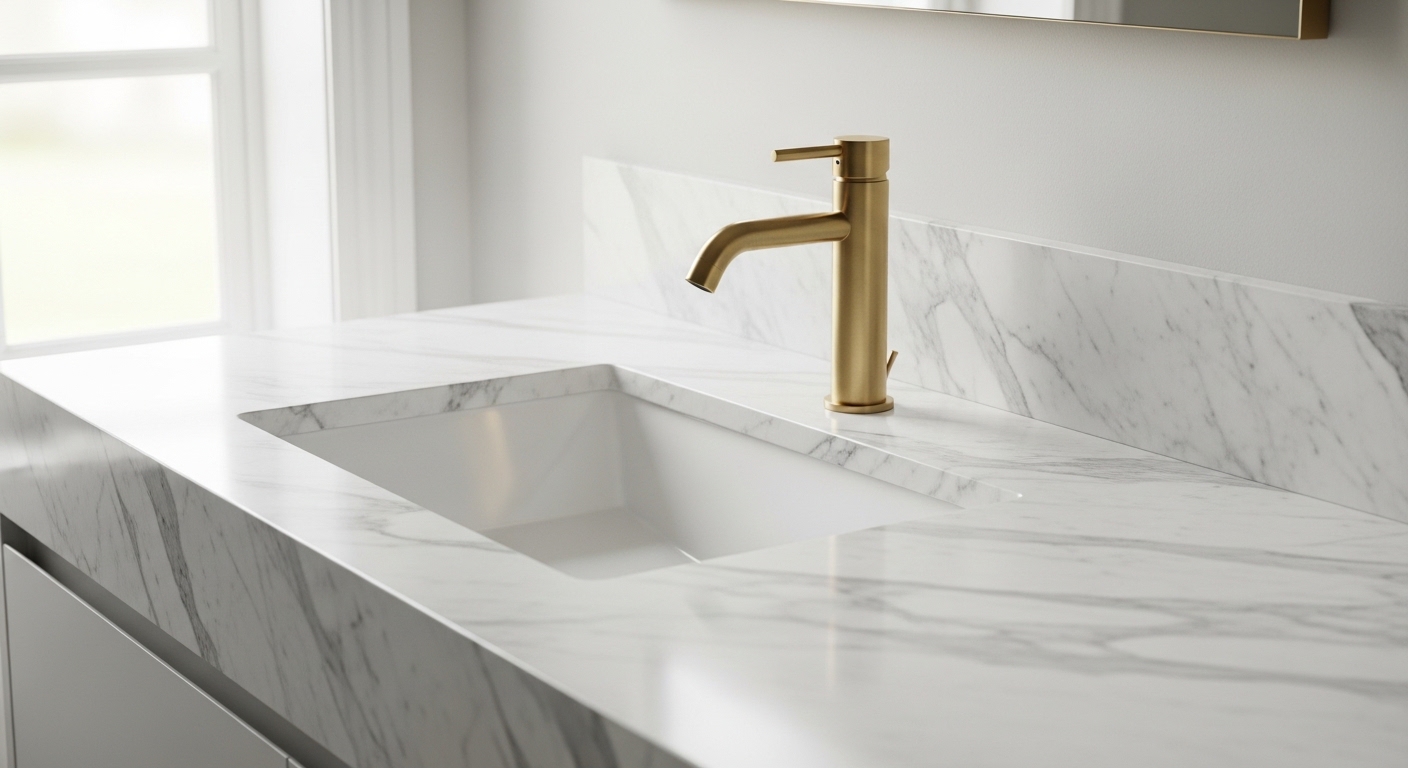
If you’re shopping for a brushed gold faucet for vanity use, you’ve probably already had the panic moment: “Is gold going to look cheap or dated?” Short answer — no, as long as you buy the brushed (also sold as satin, matte, or champagne gold) version and not a mirror-polished brass. The soft, low-sheen finish is what separates today’s warm-metal look from the shiny yellow brass of forty years ago. It pairs beautifully with white, black, marble, walnut, and greige palettes, and it’s forgiving in a way chrome simply isn’t. Below, I’ll walk you through everything that actually matters — finish durability, sink compatibility, sizing, water spots, price tiers, and the specific mistakes that make a gold faucet look wrong.
Will a brushed gold vanity faucet look dated in a couple of years?
No — brushed gold has quietly become a neutral, not a trend. Unlike the high-gloss polished brass of the 1980s, a satin/brushed gold finish is muted and warm, so it behaves more like brushed nickel than like a bold color statement. That’s the key distinction: sheen ages a finish faster than color does.
Polished, mirror-bright metals (whether chrome or brass) tie a room to a specific era because they scream for attention. A brushed finish diffuses light, so the faucet recedes and lets your countertop and mirror do the talking. Designers have leaned on warm metals for roughly a decade now, and brushed gold in particular sits in the same “quiet luxury” lane as matte black and brushed nickel. If you want the longest runway, avoid anything labeled “polished gold,” “bright gold,” or heavily rose-tinted — those are more fashion-forward and more likely to feel dated. Straight brushed/satin gold and champagne gold are the safe bets.
One more reassurance: gold hides age well. As chrome ages it shows every water spot and scratch; brushed gold’s matte texture and warm tone camouflage minor wear, so even a five-year-old faucet still reads as clean and intentional.
Brushed gold vs. polished gold vs. champagne bronze — what’s the actual difference?
They’re close cousins, but the finish sheen and the exact hue set them apart, and that changes how they age and what they pair with. Here’s the plain-English breakdown so you buy the right one the first time.
| Finish | Look | Hides spots/fingerprints? | Best paired with | Dated-risk |
|---|---|---|---|---|
| Brushed / Satin Gold | Warm yellow-gold, low matte sheen | Yes — very well | White, black, marble, walnut | Low |
| Champagne Bronze | Softer, slightly muted/greige gold | Yes | Greige, taupe, warm neutrals | Low |
| Polished / Bright Gold | Shiny mirror brass | No — shows everything | Glam, maximalist rooms | Higher |
| Brushed Brass | Deeper, warmer, more amber | Yes | Dark green, navy, black | Low–Medium |
| Rose Gold | Pink-tinted gold | Yes | Blush, soft pastels | Higher |
In practice, “brushed gold,” “satin gold,” and “champagne gold” are often used interchangeably by different brands, but the actual hue can vary from cool-yellow to warm-amber. That’s why you should never buy a matching set of accessories from three different manufacturers and assume they’ll match — they usually don’t. Buy your faucet, drain, and any coordinating towel bars or robe hooks from the same product line whenever possible.
Which brushed gold faucet fits my vanity — single-hole, widespread, or vessel?
Match the faucet to the number of holes drilled in your sink or countertop — that’s the single most important compatibility check, and getting it wrong means a return. Count the holes first, then choose.
- Single-hole faucet: One hole, one spout-and-handle unit. Best for small vanities, floating vanities, and clean modern looks. Most flexible — you can usually cover a 3-hole sink with a deck plate (escutcheon).
- Centerset faucet: Fits 3 holes spaced 4 inches apart, with the spout and handles on a single base. Common on standard drop-in bathroom sinks.
- Widespread faucet: Three separate pieces (spout plus two handles) spaced 8–16 inches apart. The upscale, “designer” look — great on larger vanities and double vanities.
- Vessel faucet: A tall single-hole faucet designed to arc up and over a bowl that sits on top of the counter. If you have a vessel bowl, you need this extra height — a standard faucet will splash or won’t clear the rim.
- Wall-mount faucet: Mounted in the wall above the sink, plumbing hidden behind it. Dramatic and easy to clean under, but requires in-wall rough-in, so it’s a remodel-stage decision.
If you’re running a vessel bowl, height and reach matter more than anything, and it’s worth reading our deeper guide on picking a high-end vessel sink faucet before you commit — the wrong arc height is the number-one vessel mistake. And if you’re leaning toward a clean, minimalist setup, a single-handle bathroom faucet is often the easiest brushed gold option to install and live with.
Does a brushed gold faucet show water spots and fingerprints on a vanity?
Far less than chrome or polished gold — the matte, brushed texture scatters light, so mineral spots and fingerprints basically disappear at arm’s length. This is one of the most underrated practical wins of brushed gold, and it’s a big reason it’s popular in hard-water regions.
That said, “hides spots” isn’t “immune to spots.” If you have hard water, you’ll still get faint mineral film over weeks, especially around the aerator and base. The fix is simple: wipe the faucet with a soft microfiber cloth and water a couple of times a week, and skip anything abrasive. Never use vinegar, bleach, abrasive pads, or “scrubbing” cleaners on a gold finish — acids and abrasives are what strip and dull the coating over time. For stubborn buildup, a drop of mild dish soap on a damp cloth is all you need.
Because most brushed gold faucets get their color from a PVD (Physical Vapor Deposition) coating, protecting that top layer is what keeps the finish looking new. Which brings us to the durability question everyone worries about.
Will the gold finish peel, chip, or fade over time?
A quality PVD-coated brushed gold faucet will not peel or fade for a decade or more — but a cheap electroplated or painted “gold” faucet absolutely can, sometimes within a year. The coating technology is the whole ballgame here, so it’s worth knowing what you’re buying.
PVD (Physical Vapor Deposition) bonds the color to the metal at a molecular level in a vacuum chamber, creating a finish that’s harder than the underlying brass and highly resistant to corrosion, scratching, and fading. It’s the same class of coating used on premium watches. Cheaper faucets use electroplating or even a tinted lacquer/powder coat to fake the look — those sit on top of the metal and can flake, bubble, or discolor, especially where water pools. We’ve written before about why a brushed finish starts peeling and how coating quality drives that failure — the same rules apply to gold.
How to protect yourself when shopping:
- Look for “PVD” in the specs. If a listing doesn’t mention the coating type at this price point, assume it’s electroplated.
- Check the warranty. Reputable brands back the finish (not just the mechanism) for years — a lifetime finish warranty is a strong signal the maker trusts the coating.
- Prefer solid brass bodies. Brass resists corrosion far better than zinc alloy (zamak), which is common in budget faucets and more prone to failure at threads and joints.
- Avoid harsh cleaners — even the best PVD lasts longer when you’re not scrubbing it with acid.
How much should I spend on a brushed gold vanity faucet in 2026?
For a vanity faucet you’ll use daily, budget $90–$250 for a solid PVD-coated brass model — that’s the sweet spot where finish quality, valve reliability, and warranty all line up. Below is a realistic breakdown of what each tier actually gets you.
| Price tier | What you typically get | Coating | Best for |
|---|---|---|---|
| Under $60 | Zinc alloy or thin brass, basic cartridge | Often electroplate/lacquer | Rentals, short-term flips (finish risk) |
| $90–$250 | Solid brass, ceramic-disc valve, PVD finish | PVD (durable) | Most homeowners — best value |
| $250–$500+ | Premium widespread/wall-mount, designer lines | PVD (premium) | High-end remodels, statement vanities |
The component that most affects everyday feel is the valve. Insist on a ceramic-disc cartridge — it’s smooth, drip-resistant, and rated for hundreds of thousands of on/off cycles, which is why it’s the standard on any faucet worth buying. Cheaper compression or rubber-washer valves are what lead to the constant drips people fight for years.
How hard is it to install a brushed gold vanity faucet myself?
For a standard single-hole or centerset faucet, a confident DIYer can swap one in about 30–60 minutes with basic tools — no plumber required in most cases. The finish being gold changes nothing about installation; a faucet is a faucet mechanically.
The basic sequence: shut off the hot and cold supply valves under the sink, disconnect the old supply lines, loosen the mounting nut and lift out the old faucet, clean the deck, drop in the new faucet with its gasket, tighten the mounting hardware from below, reconnect the supply lines (hand-tight plus a quarter turn), then turn the water back on and check for leaks. Widespread faucets take longer because you’re aligning three separate pieces. If you want a full walkthrough with a real-world example, our step-by-step on installing a bathroom faucet in under an hour covers the exact tools and gotchas.
Two tips specific to gold faucets: (1) wrap your wrench jaws or use a strap wrench so you don’t scratch the finish while tightening, and (2) hand-tighten the decorative parts — over-torquing with tools is a common way people mar a new finish before the faucet even sees water.
What sink and hardware colors go with a brushed gold faucet?
Brushed gold is a warm metal, so it sings against clean, cool backdrops — white porcelain, black, gray-veined marble, and dark walnut all make it pop. Here’s how to build a coordinated vanity without it looking like a jewelry box.
- White sink + brushed gold: The safest, most timeless combo. Crisp and bright.
- Matte black sink or vanity + brushed gold: High-contrast, modern, and very current.
- Marble/quartz with warm veining + brushed gold: Understated luxury.
- Walnut or oak vanity + brushed gold: Warm-on-warm, organic and spa-like.
For hardware, you don’t have to match every metal in the room, but be intentional. Mixing brushed gold with matte black (on the mirror, sconce, or drawer pulls) is a designer-approved two-tone combo. Mixing it with polished chrome usually looks accidental. And keep your drain and pop-up in the same gold finish — a chrome drain under a gold faucet is the detail that instantly cheapens the whole look. If you’re doing a full sink-and-faucet package rather than just a faucet swap, our guide to choosing a matched vessel sink faucet setup is worth a look for coordinating the bowl and spout.
Author note & why trust adeaga
This guide was written by the adeaga fixtures team — we’ve specified, installed, and stress-tested faucets across warm and cool finishes for thousands of customers, and we sell the exact products we describe, so our recommendations come from hands-on experience with returns, warranty claims, and real hard-water performance rather than spec sheets alone. At adeaga.net, every faucet we carry is vetted for solid-brass construction, ceramic-disc valves, and genuine PVD finishing, and our brushed gold vanity lines are backed by a manufacturer finish-and-function warranty. Where relevant, we hold products to recognized plumbing standards (such as low-lead compliance and cUPC/NSF certification for drinking-water safety), because a faucet that looks good but doesn’t meet code isn’t a bargain.
FAQ
Is brushed gold the same as champagne bronze or satin gold?
They’re very close and often used interchangeably, but not identical. “Brushed gold” and “satin gold” describe the matte sheen; “champagne bronze” is a slightly muted, warmer variation. The finish quality is the same class — the difference is a subtle hue shift. Because tones vary by brand, buy your faucet and coordinating pieces from the same product line to guarantee a match.
Does a brushed gold faucet cost more than chrome or nickel?
Usually only slightly — often $10–$40 more than the same faucet in chrome, because the gold finish requires PVD coating. That’s a fair premium for a more durable, spot-hiding finish, and it’s minor compared to the overall cost of a vanity. Beware of “gold” faucets priced the same as budget chrome; that finish is likely electroplated and more prone to fading.
Will hard water damage a brushed gold faucet?
Hard water won’t damage a quality PVD-coated gold finish, but it can leave a faint mineral film over time. The good news is that brushed gold hides that film far better than chrome. Wipe the faucet with a soft damp cloth a couple times a week, and never use vinegar or abrasive cleaners, which are what actually harm the coating.
Can I put a brushed gold faucet on a vessel sink?
Yes, but you need a faucet specifically designed for vessel sinks — a taller model that arcs up and over the bowl’s rim. A standard vanity faucet will sit too low, causing splashing or poor clearance. Check that the spout height and reach comfortably clear your bowl before buying.
How do I clean a brushed gold vanity faucet without ruining it?
Use only a soft microfiber cloth with warm water, or a drop of mild dish soap for buildup, then dry it. Avoid vinegar, lemon, bleach, ammonia, abrasive pads, and “scrubbing” cleaners — acids and abrasives strip the PVD coating and dull the finish. Gentle and regular beats aggressive and occasional.
Does brushed gold work in a small bathroom or is it too bold?
It works well in small bathrooms because the matte finish is subtle, not flashy. A single-hole brushed gold faucet against a white sink actually makes a compact vanity feel more curated and bright. Pair it with a warm-toned mirror frame or gold drawer pull to tie it together without overwhelming the space.