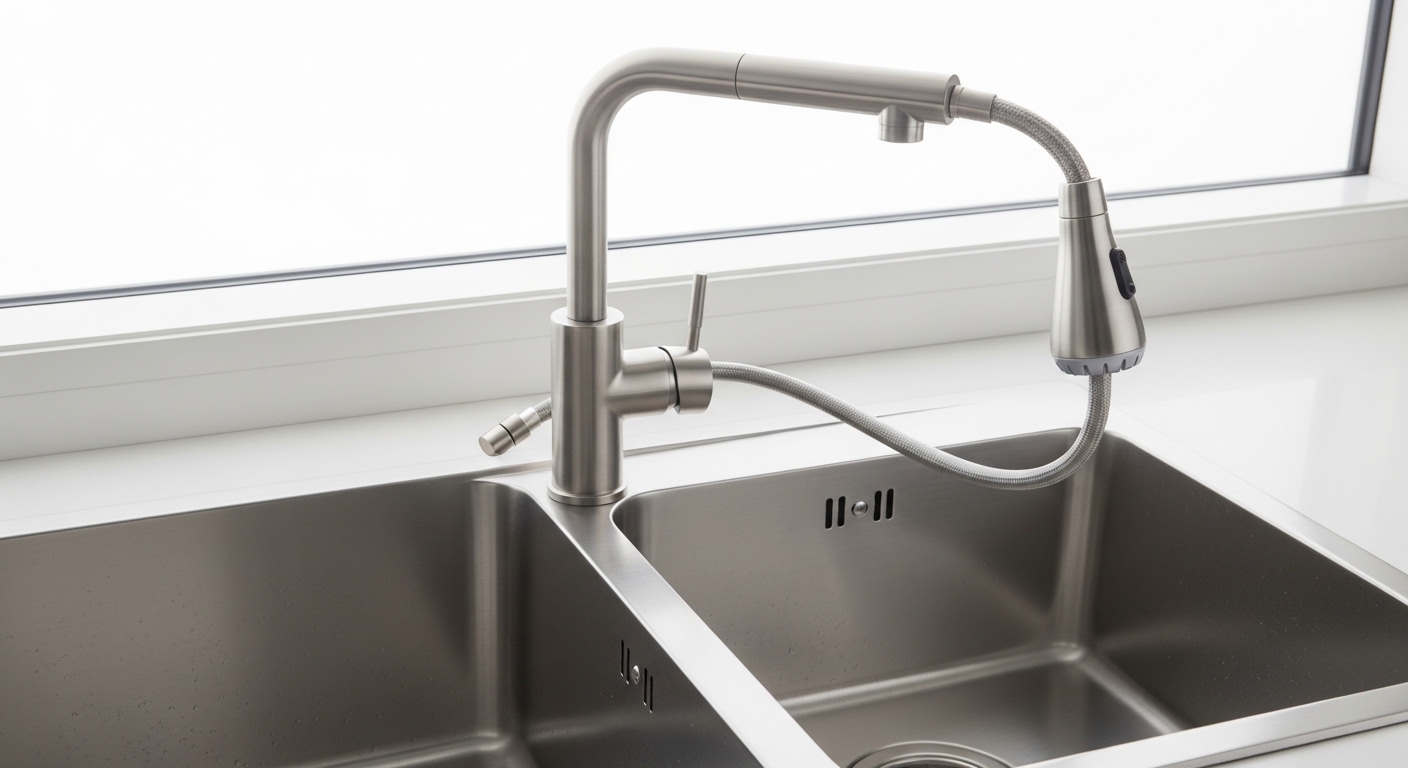
If you’ve searched for the best kitchen tap extension Screwfix carries, you’re almost certainly trying to solve one of three problems: your spout won’t reach the corners of the sink, water pressure feels weak, or you want a pull-out sprayer without paying for a brand-new mixer tap. The good news is that “tap extension” covers several very different products, and once you know which one you actually need, the choice gets simple. This guide breaks down the real options, what to check before you buy, and where an extension makes sense versus where you’re better off replacing the tap outright.
What does “kitchen tap extension” actually mean?
“Kitchen tap extension” isn’t one product — it’s four. Before you compare anything, work out which category you’re in, because they solve different problems and don’t cross over.
- Spout/height extenders: a short threaded riser that lifts the tap outlet higher so you can fit a tall stock pot or watering can under it.
- Swivel/reach extenders (aerator arm): a small angled adapter that screws onto the aerator thread and swings the water stream sideways to reach the sink corners.
- Pull-out spray hose extensions: a flexible braided hose with a spray head that adds a pull-out sprayer to a tap that didn’t have one.
- Supply/flexi extensions: longer flexible tails under the sink that let a tap reach the isolation valves — this is a plumbing fit issue, not a spout-reach issue.
Most people typing “best kitchen tap extension” want either the reach extender or the pull-out spray hose. If you meant the under-sink flexi tails, that’s a straightforward plumbing part sized by connection (usually 15mm compression to 1/2″ BSP) and length — buy to fit, not to brand.
Which kitchen tap extension is best for reaching the sink corners on a budget?
For pure reach on a tight budget, a swivelling aerator extender (often sold as a “1080° tap extender” or “sink sprayer aerator”) is the best value — it costs a few pounds, screws onto the existing aerator thread in under a minute, and swings the stream anywhere in the basin. It’s the cheapest fix for the classic “my tap only reaches the middle of the sink” complaint.
The trade-off is that these plastic-bodied extenders add a visible bulge at the spout tip and can loosen over time if the thread isn’t sealed with a wrap of PTFE tape. They also reduce flow slightly because most build a small aerator into the head. For a rental, a spare kitchen, or a “just make this usable” fix, they’re excellent. For a kitchen you care about the look of, they’re a stopgap.
Before buying, unscrew your current aerator and check whether the thread is male (M22/M24 outside) or female (M22 inside) — the two are not interchangeable, and getting this wrong is the number one reason these returns pile up. Most kits ship with both adapters, but confirm it on the listing.
Is a pull-out spray extension better than buying a new pull-out tap?
If your existing tap is decent and you just want spray function, a pull-out hose extension is cheaper; if the tap is old, dripping, or a fixed-spout monobloc that can’t take a diverter, buy the new pull-out mixer tap instead. That’s the honest answer, and it usually comes down to whether your current tap has a removable aerator body that can accept a diverter fitting.
Genuine retrofit spray extensions work by teeing off the aerator outlet with a diverter, so they only suit taps with the right outlet design. A sealed decorative spout won’t take one. If you’re already at the point of dismantling the spout, the labour is similar to fitting a whole new tap — and a purpose-built pull-out mixer gives you a cleaner result, a single warranty, and a magnetic or weighted dock that retracts the hose properly. For a deeper look at dedicated retrofit sprayers, our guide on whether you really need a pull down kitchen faucet extension walks through the exact scenarios where the add-on beats a full replacement.
Kitchen tap extension types compared
Here’s how the main options stack up so you can match the product to your problem at a glance.
| Extension type | Best for | Typical price (Screwfix range) | Fitting difficulty | Main downside |
|---|---|---|---|---|
| Swivel aerator extender | Reaching sink corners cheaply | £3–£10 | Very easy (hand-tighten) | Plastic look, can loosen |
| Height/spout riser | Fitting tall pots & buckets | £8–£20 | Easy | Raises splash height |
| Pull-out spray hose retrofit | Adding a sprayer to an existing tap | £15–£40 | Moderate (needs compatible outlet) | Only fits certain taps |
| Under-sink flexi tail extension | Reaching isolation valves | £4–£12 | Moderate (plumbing) | Fit is size-specific |
| Full pull-out mixer tap | Old/failing tap replacement | £40–£150+ | Harder (full swap) | Higher cost, more labour |
What should I check before buying a kitchen tap extension at Screwfix?
Check four things before you add anything to the basket: thread type, thread gender, WRAS/regulation approval, and flow rate. Get these right and the extension will fit and perform; skip them and you’ll be making a return trip.
- Thread size: most UK kitchen aerators are M22 or M24. Measure the outlet or read your tap’s spec before ordering.
- Male vs female thread: confirm whether your spout thread sits on the outside (male) or inside (female). Adapters are common but not universal.
- WRAS approval: anything that touches your drinking water should be WRAS-approved (the UK water fittings regulations standard). Reputable extensions state this — it means the materials won’t leach into potable water and the fitting won’t back-siphon.
- Flow and aeration: many extenders add their own aerator. If your pressure is already weak, an extra restrictor makes it worse. If low flow is your real complaint, fixing pressure first is smarter — our guide on how to increase water flow in a kitchen faucet covers the aerator cleaning and cartridge checks that often solve it without any new hardware.
One more practical note: check your water pressure type. Homes on a gravity-fed (low-pressure) system behave very differently from mains/combi-boiler (high-pressure) homes. A spray extension that’s a joy on high pressure can dribble on a gravity system, so read the minimum-bar rating on the listing.
How do I fit a kitchen tap extension myself?
Most reach and height extenders fit in under five minutes with no tools beyond your hands and a scrap of PTFE tape — spray-hose retrofits take longer because you’re opening the spout. Here’s the general process for a screw-on extender, which is by far the most common type people buy.
- Unscrew the existing aerator from the tap spout (turn anticlockwise; use a cloth for grip or the plastic key that came with the tap).
- Check the thread gender and fit the matching adapter from your kit.
- Wrap two or three turns of PTFE tape clockwise around the thread to seal and prevent loosening.
- Hand-tighten the extender onto the spout — don’t overtighten plastic threads or you’ll crack them.
- Run the tap and check for drips at the joint. If it weeps, add another wrap of PTFE.
If you’re fitting a full pull-out mixer instead, that’s a bigger job involving isolating the water, disconnecting the old tap, and threading the new hose. It’s very doable as a DIY task, and if the old tap is seized on, our walkthrough on removing an old faucet from a kitchen sink without calling a plumber covers the stubborn nuts and corroded fittings that usually cause grief.
Which kitchen tap extension is best for hard water areas?
In hard water areas, choose a solid brass or stainless extension with a removable, easy-clean aerator — never a fixed plastic aerator you can’t descale. Limescale is the number one killer of tap extenders: it clogs the aerator mesh, weakens the spray pattern, and eventually seizes the swivel joint.
Look for a design where the aerator screen pops out for a vinegar soak, and avoid over-complex spray heads with dozens of tiny nozzles that scale up fast. Brass and stainless bodies also survive the regular descaling far better than chrome-plated plastic, which can pit and peel once the coating is compromised. If your water leaves white crust on everything, that maintenance access matters more than any brand name on the box.
When is a tap extension the wrong answer entirely?
Skip the extension and replace the tap when it already drips, when the cartridge is worn, or when the spout can’t physically accept a diverter — an extension just adds a new joint to a failing system. Bolting a spray hose onto a tap that’s already leaking from the base means you’ll be doing the whole job twice.
Signs you’re better off replacing: the tap drips even when fully closed, the handle is stiff or grinds, the finish is flaking, or the spout is a slim decorative design with no serviceable aerator. In those cases the smart money goes on a new pull-out mixer with its own warranty rather than an extension that inherits all the old tap’s problems. If it’s a repair you’re leaning toward instead, our guide to kitchen faucet repair helps you decide whether the existing tap is worth saving before you spend on any accessory.
How we’d choose: a quick decision guide
Put simply, match the product to the specific complaint:
- “It won’t reach the corners.” → Swivel aerator extender (£3–£10).
- “I can’t fit tall pots under it.” → Height riser (£8–£20).
- “I wish it had a pull-out sprayer.” → Retrofit spray hose if the outlet is compatible; otherwise a new pull-out mixer.
- “The tap won’t reach the valves under the sink.” → Flexi tail extension sized to your connections.
- “It drips / the finish is peeling / it’s just old.” → Replace the tap, don’t extend it.
FAQ
Does Screwfix sell kitchen tap extensions?
Yes — Screwfix stocks aerator adapters, flexible tap connectors, spray hose kits, and full pull-out mixer taps that cover every category of “extension.” Because the term spans several products, search by the specific type you need (aerator extender, flexi tail, or pull-out tap) rather than the generic phrase to land on the right part.
How do I know if a spray extension will fit my tap?
Unscrew your current aerator and check the thread size (usually M22 or M24) and whether it’s male or female. Retrofit spray extensions only work on taps whose outlet can accept a diverter fitting — sealed decorative spouts can’t take one, so confirm compatibility on the listing before ordering.
Will a tap extension reduce my water pressure?
It can, slightly, if the extender adds its own aerator or restrictor. On a strong mains/combi system you’ll barely notice; on a gravity-fed low-pressure system it’s worth checking the minimum-bar rating first. If weak pressure is your actual problem, clean or replace the existing aerator before adding anything.
Are cheap plastic tap extenders any good?
For reaching sink corners or fitting tall pots, yes — a £5 swivel extender genuinely solves the problem and fits in a minute. The limitations are looks and longevity: plastic bodies can loosen, discolour, and scale up in hard water. For a kitchen you care about aesthetically, a brass or stainless version lasts longer and looks better.
Can I fit a kitchen tap extension without a plumber?
Screw-on reach and height extenders need no plumbing at all — they hand-tighten onto the spout thread. Spray-hose retrofits and full tap swaps involve isolating the water and working under the sink, but both are standard DIY jobs. Only call a plumber if the old tap is badly seized or you find corroded, non-standard fittings underneath.
What’s the difference between an aerator and a tap extension?
An aerator is the small mesh insert at the tap’s tip that mixes air into the water for a soft, splash-free stream. A tap extension is a separate part that screws onto that same thread to add reach, height, or spray function. Many extenders include their own aerator, which is why fitting one can change your flow feel.
About the author: This guide was written by the adeaga fixtures team, who spend their days specifying and testing kitchen and bathroom taps, spray heads, and fittings across UK and international brands. We handle real retrofit jobs, so the advice here reflects what actually fits and lasts, not just spec sheets.
Why trust adeaga: adeaga (adeaga.net) is a specialist faucet and bathroom-fixtures resource. We evaluate products against UK water fittings regulations and look for WRAS-approved components, solid-brass and stainless construction, and manufacturer warranties before we recommend anything. When a part touches your drinking water, we treat standards compliance and clear warranty terms as non-negotiable — an extension may be a few pounds, but a back-siphon or a leak under the sink is not a few-pound problem.