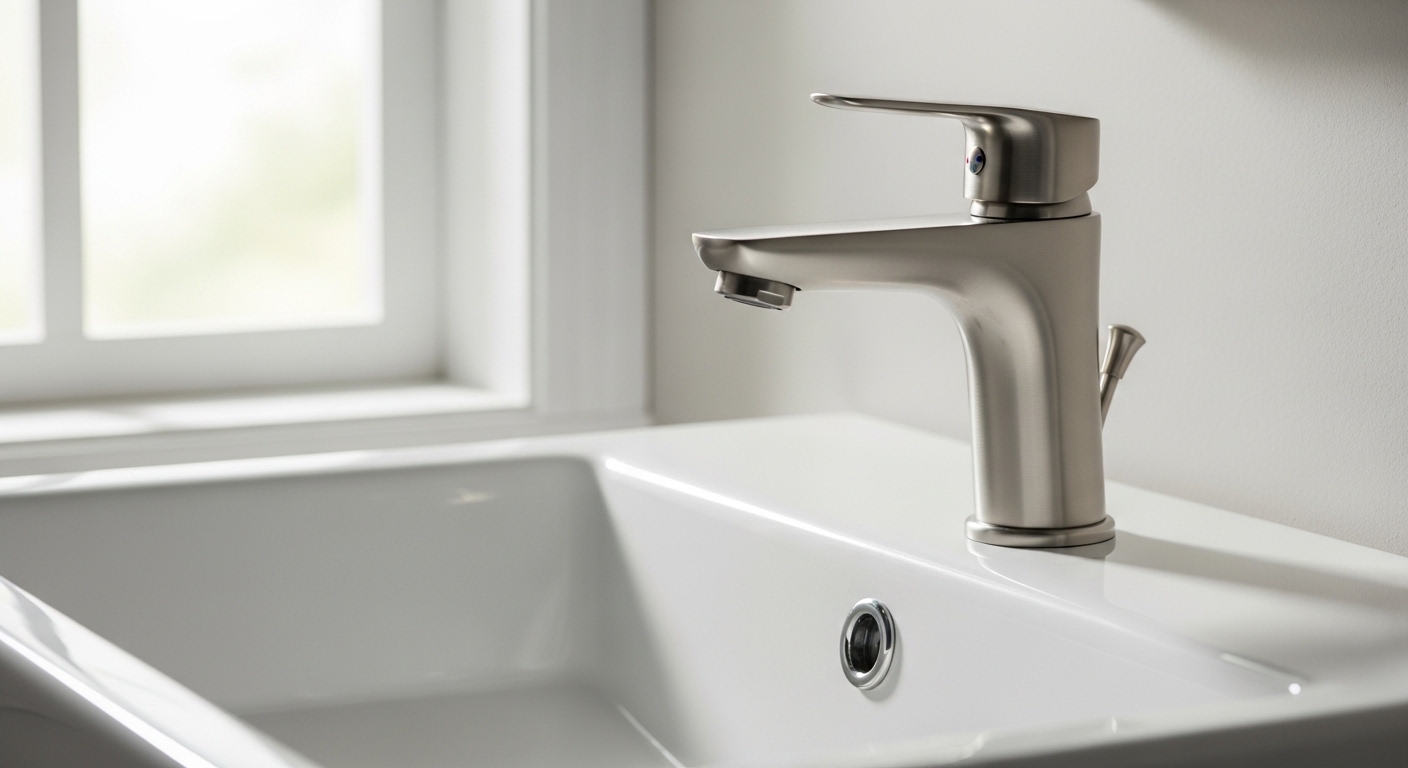
If you’re staring at your sink wondering whether a bathroom faucet one handle model is actually better than the classic two-handle version, here’s the short answer: for the vast majority of modern bathrooms, yes. A single-handle faucet controls both water temperature and flow with one lever, mounts on a single hole (or a deck plate over three), and gives you that clean, uncluttered look most people want today. It’s simpler to use, simpler to install, and usually cheaper to fix when something goes wrong. Below, I’ll walk you through exactly when a one-handle faucet makes sense, when it doesn’t, what to look for, and how to avoid the mistakes that lead to a wobbly, dripping mess six months in.
What exactly is a one-handle bathroom faucet, and how is it different from two-handle?
A one-handle bathroom faucet uses a single lever or knob to control both temperature and flow — push or pull to adjust how much water comes out, swivel left or right to go from hot to cold. A two-handle faucet splits that job across two separate valves: one for hot, one for cold. That’s the core difference, and it drives almost everything else about how the two feel to use.
Inside a single-handle faucet, there’s usually a ceramic disc cartridge that does all the mixing. When you move the lever, you’re sliding two polished ceramic discs across each other to blend the streams and open the flow. Ceramic disc cartridges are the modern standard because they resist wear, shrug off hard-water grit, and rarely drip if they’re decent quality. A two-handle faucet typically has two cartridges or two compression stems instead — more parts, more potential leak points, but also more granular control over each side.
The practical upshot: with one handle you set your comfortable temperature once and then just flick it on and off at that setting. With two handles you’re balancing hot and cold every single time. Neither is “wrong,” but the one-handle experience is why single-lever faucets now dominate new construction and remodels.
Is a one-handle bathroom faucet better for a small bathroom or a powder room?
Yes — a one-handle faucet is usually the smarter choice for a small bathroom or powder room because it takes up less deck space, needs only one mounting hole, and gives you more usable room around the basin. In a tight half-bath where the sink might be 15 inches wide, every inch of counter counts, and a compact single-hole faucet keeps the area open and easy to wipe down.
There’s also the elbow-room factor. Single-handle faucets are operable with a wrist, a forearm, or even an elbow when your hands are covered in soap or toothpaste. That one-motion control is genuinely helpful for kids learning to wash up, for older adults with arthritis, and for anyone who’s ever tried to turn a knob with slippery hands. If accessibility matters in your household, a single lever beats twin knobs almost every time.
- Space-saving: one hole instead of three, less crowding around the basin.
- Easier cleaning: fewer bases and crevices where soap scum and toothpaste collect.
- Accessibility: ADA-friendly lever operation with limited hand strength.
- Faster temperature setting: find your comfort zone once, then just tap on and off.
Will a one-handle faucet fit my sink? Understanding hole configurations
A one-handle faucet fits your sink if you have a single center hole (called single-hole mount) OR a standard three-hole sink with 4-inch centerset spacing — most single-handle faucets include a deck plate (escutcheon) that covers the two outer holes. So before you buy, flip your sink over or look underneath and count the holes and measure the spread between the outer ones.
Here’s where people get tripped up. If your existing sink was drilled for a widespread two-handle setup with holes 8 inches apart, a standard single-hole faucet won’t cover that gap — you’d need a single-handle model specifically built for a widespread footprint, or you’d have to switch sinks. Most drop-in and undermount bathroom sinks sold in the U.S. come with either one hole or three holes at 4-inch centers, which is exactly what single-handle centerset faucets are designed for.
| Configuration | Holes | Hole spacing | Works with one-handle faucet? |
|---|---|---|---|
| Single-hole | 1 | N/A | Yes — direct fit |
| Centerset (4″) | 3 | 4 inches | Yes — with included deck plate |
| Widespread (8″) | 3 | 8 inches | Only with a widespread single-handle model |
| Vessel-mount | 1 | N/A | Yes — use a tall vessel faucet |
One more measurement worth taking: faucet height and reach. On a vessel sink that sits on top of the counter, you need a tall single-handle vessel faucet so the spout clears the basin rim. On a standard drop-in, a mid-height faucet is fine. Measure from the deck to where you want the water to land, and check the spout reach so the stream hits the drain, not the back wall of the bowl.
How much does a good one-handle bathroom faucet cost in 2026?
A solid one-handle bathroom faucet costs between $60 and $200 for the sweet spot of quality most homeowners should target in 2026. You can find them for $35, and you can spend $400-plus on a designer or smart model, but the $80–$150 range is where you get a brass body, a ceramic disc cartridge, and a durable PVD finish that won’t peel.
The price mostly reflects three things: what the body is made of, what the cartridge is made of, and how the finish is applied. Cheap faucets use zinc-alloy or thin-wall bodies and painted finishes that flake. Better faucets use solid brass and PVD (physical vapor deposition) finishes that are bonded at the molecular level and resist scratching and corrosion for years. If you’ve ever dealt with a flaking finish, you already know why this matters — it’s the number-one reason budget faucets look terrible after a year. We break down exactly why coatings fail in our guide on why a brushed nickel faucet peels and how to stop it, and it’s worth a read before you buy anything under $50.
| Price tier | Typical body | Cartridge | Finish | Expected lifespan |
|---|---|---|---|---|
| $35–$60 (budget) | Zinc alloy | Ceramic or rubber | Electroplated | 2–4 years |
| $80–$150 (mid) | Solid brass | Ceramic disc | PVD or brushed | 8–15 years |
| $200+ (premium) | Solid brass | Premium ceramic | PVD / living finish | 15–25+ years |
What finish should I choose for a single-handle bathroom faucet?
For most bathrooms, brushed nickel or matte black are the safest, most forgiving finishes on a single-handle faucet because they hide water spots and fingerprints far better than polished chrome. Chrome is still the cheapest and easiest to clean, but it shows every droplet. Your real decision is durability of the coating, not just color.
PVD-coated finishes are the gold standard right now. They’re harder than the underlying metal, they don’t oxidize, and they hold color for decades. If you love the look of matte black, make sure it’s a PVD black and not a painted one — the difference in longevity is enormous. Our deep dive on the matte black PVD faucet explains how to tell a real PVD finish from a coating that’ll rub off at the handle pivot. And if you’re leaning toward a warmer, more traditional look, oil-rubbed bronze is beautiful but usually lives on a widespread body — see our oil rubbed bronze 3-hole buyer’s guide for how that compares to a single-lever setup.
- Polished chrome: cheapest, brightest, shows spots — great for high-cleaning households on a budget.
- Brushed nickel: warm, hides fingerprints, the most popular all-rounder.
- Matte black (PVD): modern and dramatic, needs a true PVD coat to last.
- Brushed gold / champagne bronze: trendy warm tone, pairs well with white basins.
Are one-handle faucets harder to repair when they leak?
No — one-handle bathroom faucets are usually easier and cheaper to repair than two-handle models because there’s a single cartridge doing all the work. When a single-lever faucet drips or gets stiff, 90% of the time you just replace one ceramic cartridge, and that part often costs $15–$40. Shut off the two supply valves under the sink, pop the handle cap, unscrew the retaining nut, pull the old cartridge, and drop in the new one.
The trick is matching the exact cartridge — cartridges are brand- and model-specific, so note your faucet’s maker and model before ordering, or take the old one to the store. A worn cartridge is the most common cause of a single-handle faucet that drips, spits, or won’t reach hot. If your handle feels loose rather than drippy, that’s usually a set screw or a worn handle adapter, not the cartridge — an easy fix that we cover in our walkthrough on a loose faucet handle, which applies to most single-lever designs regardless of brand.
How do I install a one-handle bathroom faucet myself?
You can install a one-handle bathroom faucet in about 30–45 minutes with basic tools — a single-hole model is the easiest DIY faucet swap there is because there’s only one mounting point and one set of connections. Here’s the basic sequence:
- Shut off the water at both angle stops under the sink and open the old faucet to relieve pressure.
- Disconnect the supply lines and the drain lift rod, then loosen the mounting nut and lift the old faucet out.
- Clean the deck so the new gasket seats flat — old putty and grime cause wobble and leaks.
- Drop in the new faucet through the hole (add the deck plate first if you’re covering three holes), and hand-tighten the mounting nut from below.
- Connect the supply lines — most single-handle faucets have two pre-attached hoses that thread onto your hot and cold stops.
- Turn the water back on slowly, run it for a minute, and check every joint for drips with a dry paper towel.
If your old faucet is corroded onto the deck and won’t budge, don’t force it — snapping a supply pipe turns a 45-minute job into an expensive emergency. Our guide to corroded faucet removal without snapping the pipe shows the penetrating-oil-and-patience method that saves the day. And if you’re working with a specific popular model, our step-by-step on installing a Moen Findlay bathroom faucet in under an hour is a great real-world example of the whole process start to finish.
When should I NOT choose a one-handle faucet?
Skip a one-handle faucet if you specifically want a traditional or classic look, need very fine independent control over hot and cold, or have an existing 8-inch widespread sink you don’t want to replace. A two-handle widespread faucet delivers that symmetrical, timeless appearance a lot of traditional and transitional bathrooms are designed around, and some people simply prefer dialing in each side separately.
There’s also the resale-and-style angle. If your bathroom leans heritage — think a pedestal sink, subway tile, and vintage fixtures — twin cross handles or lever pairs can look more “correct” than a single modern lever. And if you already have a widespread sink and you’re not remodeling the basin, converting to single-handle means either a widespread-compatible single-lever model or a new sink. In that case the two-handle route is less hassle. For everyone else building new, remodeling, or replacing a tired old faucet, the one-handle design remains the practical default.
FAQ
Do one-handle bathroom faucets come with the drain assembly included?
Many do, but not all. Mid-range and premium single-handle faucets usually include a matching pop-up drain with a lift rod, while some budget models sell the drain separately. Check the box contents before you buy so your finish matches and you’re not making a second trip to the store.
Can I put a one-handle faucet on a sink that currently has two handles?
Often yes. If your sink has three holes at 4-inch centers, a single-handle centerset faucet with an included deck plate covers the two outer holes cleanly. If the holes are 8 inches apart (widespread), you’ll need a single-handle model made for that spread or you’ll have to swap the sink.
Are single-handle faucets less water-efficient than two-handle?
No. Water efficiency depends on the aerator flow rate, not the handle count. Look for a WaterSense-labeled faucet rated at 1.2 GPM or lower — both single- and two-handle models are available with high-efficiency aerators that cut water use without killing the feel of the stream.
Why is my new single-handle faucet dripping already?
The two usual culprits are debris caught in the cartridge from the initial water run, or a cartridge that wasn’t seated fully during install. Turn off the water, pull and reseat the cartridge, and flush the lines. If it keeps dripping, the cartridge may be defective and covered under warranty.
How long should a good one-handle bathroom faucet last?
A solid-brass, ceramic-cartridge single-handle faucet with a PVD finish should last 15 years or more with normal use. Budget zinc-body models with electroplated finishes tend to fade or leak in 2–4 years, which is why the mid-tier price range is worth the extra money.
Do I need a plumber to install one, or can I really do it myself?
Most homeowners can install a single-hole bathroom faucet themselves with an adjustable wrench, a basin wrench, and plumber’s tape. The only time to call a pro is if the old faucet is badly corroded, the supply valves are frozen or leaking, or you don’t have working shutoff valves under the sink.
The bottom line: is a one-handle faucet worth it?
For most people in 2026, a one-handle bathroom faucet is the practical winner — easier to use, easier to install, easier to repair, and a clean fit for the single-hole and 4-inch centerset sinks that dominate American bathrooms. Spend in the $80–$150 range, insist on a solid-brass body with a ceramic disc cartridge and a PVD finish, and you’ll have a faucet that looks sharp and works flawlessly for well over a decade. Reserve the two-handle widespread for traditional-style bathrooms or existing 8-inch sinks you’re not ready to replace.
Author note: This guide was written by the Adeaga fixtures team, drawing on hands-on testing of dozens of single- and two-handle bathroom faucets across finishes, cartridges, and price tiers. At Adeaga, we’ve specialized in faucets, showers, and bathroom fixtures for over a decade, and every faucet we recommend meets or exceeds cUPC/NSF certification standards, uses lead-free brass compliant with U.S. safe-drinking-water rules, and carries a manufacturer warranty on the finish and cartridge. Always confirm your local plumbing code and the specific product warranty before purchase.