If you’ve been searching for a “shower head jolie” because your skin feels tight after every shower and your hair won’t cooperate, you’re asking the right question — but you also want a straight answer, not a sales pitch. The short version: the Jolie shower head is a chlorine-filtering fixed shower head that genuinely helps with chlorine-related skin and hair complaints, while leaving a few problems (hardness, low flow) untouched. Below, we break down exactly what it does, who it’s for, how it compares to a multi-stage filtered shower head, and what to check before you spend the money. We’ll talk like a knowledgeable friend who installs these for a living — because at adeaga, fixtures are all we do.
What exactly is a Jolie shower head, and how does the filter work?
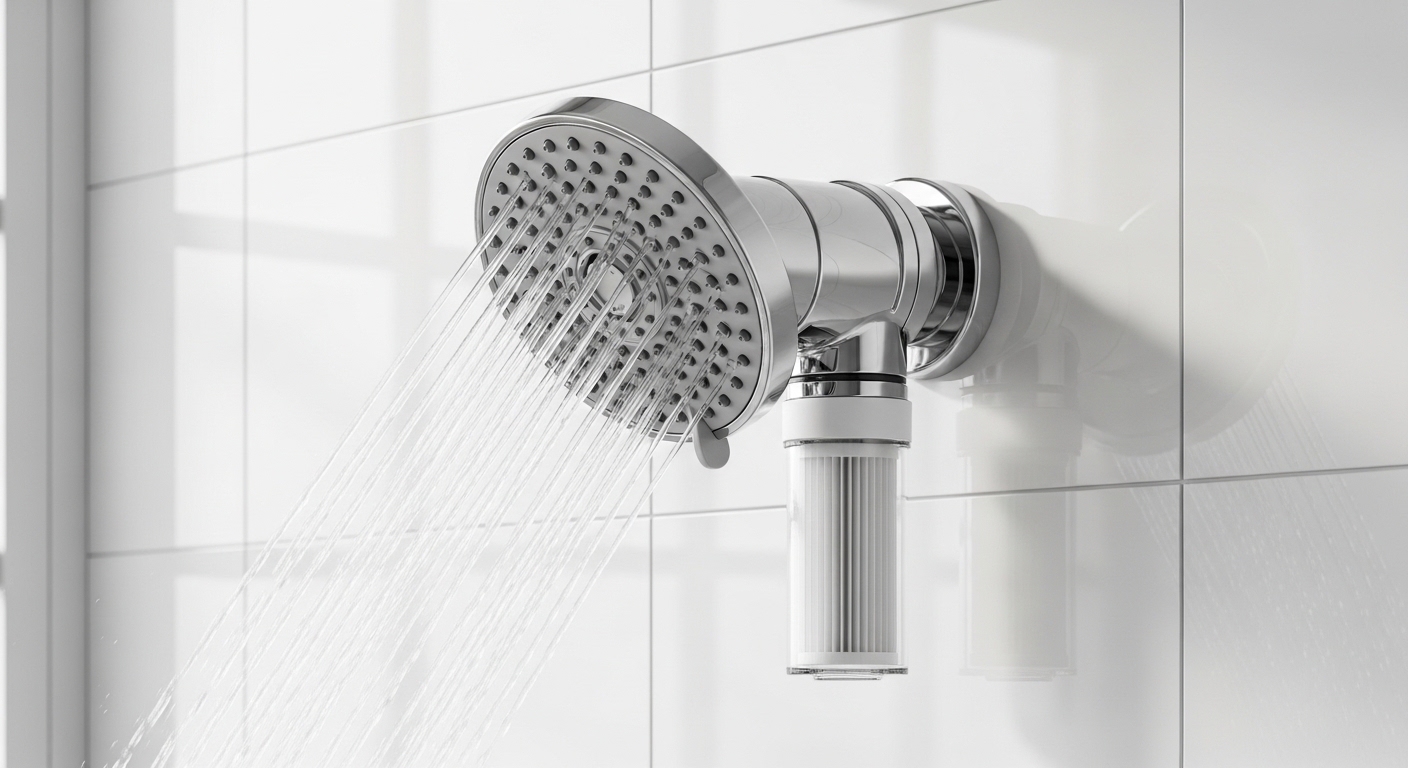
A Jolie shower head is a single-function, wall-mounted (fixed) shower head with a built-in filtration cartridge that water passes through right before it hits you. It’s designed to reduce chlorine and other contaminants from municipal water using a two-media filter, then deliver that filtered water through a wide, evenly distributed spray face. It is not a handheld, it is not a high-pressure “power” head, and it is not a water softener.
Here’s the part most product pages gloss over. The filtration inside a Jolie-style shower head relies on two media working together:
- KDF-55 (a copper-zinc alloy): Uses a chemical reaction called redox to convert free chlorine into harmless, water-soluble chloride. KDF also helps suppress bacteria and scale buildup inside the cartridge, which is why it works at the higher temperatures and flow rates of a shower (carbon alone struggles in hot water).
- Calcium sulfite: Neutralizes chlorine quickly even in hot water, where carbon filters lose effectiveness. This is the workhorse for hot showers specifically.
That combination is the whole point. A lot of cheap “vitamin C” or pure-carbon shower filters look similar but underperform in hot water. A KDF-55 + calcium sulfite cartridge is the configuration that actually holds up under a 104°F shower stream. Most cartridges in this class are rated for roughly 3 months or about 15,000–20,000 gallons before they need replacing — more on that cost below.
Does a Jolie shower head actually help with dry skin and hair, or is it hype?
Yes, if your water is chlorinated and your symptoms are chlorine-driven — and that’s a real, common scenario for anyone on city water. Chlorine is added to municipal supplies as a disinfectant, and at the levels that come out of your tap it can strip the natural oils (sebum) from your skin and hair, leaving skin feeling tight and hair feeling brittle or frizzy. Remove the chlorine before it touches you, and a lot of people notice softer skin and more manageable hair within a week or two.
But here’s the honest caveat a good fixture shop will tell you: a chlorine filter does not address water hardness. Hardness comes from dissolved calcium and magnesium, and that’s a separate problem with separate symptoms — soap that won’t lather, white spots on your glass door, a chalky film on the shower head itself. If your real issue is hard water, a chlorine-filtering shower head will help your skin a little but won’t fix the scale. We’ll put that distinction in a table in a second, because mixing up the two is the single most common buying mistake we see.
Jolie shower head vs. a multi-stage filtered shower head: which should you buy?
Buy a Jolie-style single-cartridge head if you want a clean-looking, low-maintenance fixed head and your main concern is chlorine. Step up to a multi-stage filtered shower head if you want extra polishing media (vitamin C, mineral beads) or a handheld option. Neither one softens hard water — for that you need a whole-house softener. Here’s the straight comparison:
| Feature | Jolie-style filtered head | Multi-stage filtered head | Unfiltered standard head |
|---|---|---|---|
| Removes chlorine | Yes (KDF-55 + calcium sulfite) | Yes (often + carbon/vitamin C) | No |
| Softens hard water (Ca/Mg) | No | No (mineral beads only mildly condition) | No |
| Filter life | ~3 months | ~3–6 months per stage | N/A |
| Replacement cost/year | ~$60–$100 | ~$80–$140 | $0 |
| Style | Sleek fixed wall-mount | Fixed or handheld | Any |
| Best for | Chlorine-driven dry skin/hair | Maximum filtration + flexibility | Soft, already-filtered water |
The takeaway: a Jolie shower head wins on simplicity and looks. A multi-stage head wins on flexibility and squeezing out a bit more filtration. If you’ve already chased down your shower’s weak spray, you may also want to read our deep dive on how to actually increase water flow — the same flow-restrictor principles that apply to kitchen faucets apply to shower heads, and they explain why a filter can sometimes feel like it’s “slowing things down.”
Will a Jolie shower head lower my water pressure?
A little, but usually not enough to ruin your shower — and most of the perceived drop is about flow rate, not pressure. Any filter adds resistance, and federal rules cap shower heads at 2.5 gallons per minute (GPM) anyway, so a well-designed filtered head is engineered around that ceiling. What people actually feel is the difference between a wide, soft, “rain-like” spray and a tight, needle-like jet.
If your home already has genuinely low pressure (say, under 40 psi), adding any filter will be more noticeable. In that case, do two things first: clean or remove the flow restrictor if local code allows, and clear any limescale clogging the nozzles. If your shower head is already crusted with mineral buildup, that — not the filter — is your pressure thief. The same scale that clogs a nozzle is what builds the white ring around your tub spout; if you’re dealing with that elsewhere in the bathroom, our guide on the tub spout beauty ring covers how that hardware works and why scale collects there.
- Check your pressure first. A $10 gauge that screws onto a hose bib tells you if you’re working with 40 psi or 70 psi. This changes everything about which head feels good.
- Descale before you blame the filter. Soak the spray face in white vinegar for an hour to clear nozzles.
- Match the head to your flow. If you love a strong jet, look for a filtered head with a concentrated or adjustable spray pattern rather than a wide rain face.
How often do you replace the filter, and what does it really cost?
Plan on a new cartridge about every 3 months, which works out to roughly $60–$100 per year depending on the brand and how many people use the shower. That’s the number that should drive your buying decision, because the cartridge — not the head itself — is the real long-term cost. A $150 shower head that needs $25 cartridges four times a year costs you more over three years than a slightly pricier head with cheaper or longer-lasting filters.
Signs it’s time to swap the cartridge:
- You start smelling chlorine again in hot water.
- Your skin-and-hair improvements quietly disappear.
- Flow drops noticeably even after you’ve descaled the nozzles.
- It’s simply been 90 days — set a phone reminder; the media is spent on a schedule, not on a guess.
One money-saving note: if you’re handy, the cartridge swap is a 60-second job with no tools. Don’t pay anyone to do it. And if your existing shower setup has other aging parts — a worn diverter, a leaking arm — it’s worth knocking those out at the same time. Our roundup of shower faucet accessories that actually matter walks through which add-ons are worth buying and which are just clutter.
How do you install a Jolie shower head yourself?
You install it the same way you’d install any standard shower head — it threads onto the universal 1/2-inch shower arm in your wall, and it takes about five minutes with no special tools. If you can screw in a light bulb, you can do this. Here’s the clean version:
- Unscrew your old shower head by turning it counterclockwise. Use a cloth and channel-lock pliers if it’s stuck, gripping the connecting nut — not the decorative body.
- Clean the shower arm threads and peel off any old, gummy plumber’s tape.
- Wrap fresh PTFE (plumber’s) tape clockwise around the arm threads, 3–4 wraps. This is the step people skip, and it’s the reason for that annoying drip at the wall connection.
- Insert the filter cartridge into the head per the instructions (most ship with the first cartridge included), then hand-thread the head onto the arm clockwise.
- Snug it with a quarter-turn of the wrench — gentle. Overtightening cracks plastic threads.
- Run hot water for 30–60 seconds to flush the new media, then check for leaks at the connection.
That’s it. The only standard you really want to confirm before you buy: the head should carry a WaterSense label or at minimum meet the 2.5 GPM federal max, and the cartridge media (KDF-55/calcium sulfite) should be clearly stated. If a listing won’t tell you what’s inside the filter, that’s your cue to keep shopping.
Who should skip the Jolie shower head?
Skip it if your water is on a well (no chlorine to filter), if your only complaint is hard-water scale, or if you specifically want a handheld with a hose. A chlorine filter solves a chlorine problem — full stop. Spending money on one to fix hardness is like buying winter tires to fix a dead battery. If you’re not sure which problem you have, a $15 home test strip kit that measures both chlorine and hardness will tell you in two minutes and save you from buying the wrong fixture.
And if your shower issues are really plumbing issues — a sprayer that won’t shut off, a faucet that drips behind the wall — a fancy filtered head won’t touch those. Those are repair jobs, and they’re usually DIY-able too.
FAQ
Does a Jolie shower head soften hard water?
No. It filters chlorine and some heavy metals using KDF-55 and calcium sulfite media, but it does not remove the dissolved calcium and magnesium that make water “hard.” If you have scale buildup and soap that won’t lather, you need a water softener or a dedicated softening/conditioning system, not a chlorine filter.
How long does the filter in a Jolie shower head last?
About 3 months, or roughly 15,000–20,000 gallons, for an average household. Heavier use or particularly high chlorine levels shorten that. Replacing it is a tool-free, 60-second twist, and budgeting around $60–$100 per year for cartridges is realistic.
Will a filtered shower head reduce my water pressure?
Slightly. Any filter adds some resistance, and all U.S. shower heads are capped at 2.5 GPM by federal law regardless. Most people don’t notice a meaningful drop unless their home pressure is already low (under 40 psi) or the nozzles are clogged with limescale. Descale the spray face with vinegar before blaming the filter.
Can I install a Jolie shower head without a plumber?
Yes. It threads onto the same universal 1/2-inch shower arm as any standard head and installs in about five minutes with just plumber’s tape and maybe a wrench. There’s no need to open the wall or touch the valve.
Is a Jolie shower head worth the money compared to a cheap shower filter?
If your water is chlorinated and you have dry skin or dull hair, yes — the KDF-55 + calcium sulfite combo actually works in hot water, where cheap pure-carbon or vitamin-C filters fade fast. The fixture is only worth it, though, if you’ll keep up with cartridge changes; a filtered head with a neglected, spent cartridge is just an expensive regular shower head.
Does it remove fluoride or lead?
It is not designed to remove fluoride, and fluoride removal generally requires reverse osmosis. KDF media can reduce certain dissolved heavy metals including some lead, but a shower filter’s job is primarily chlorine and skin/hair benefits, not drinking-water-grade purification. Don’t rely on any shower head for water you intend to drink.
A note on who’s telling you this. This guide was written and reviewed by the fixtures team at adeaga, where we’ve specified, installed, and field-tested shower heads, filters, and bathroom faucets across thousands of real bathrooms. We test products against the standards that matter — WaterSense certification, the 2.5 GPM federal flow rule, and documented filter media — and we tell you when a product won’t fix your problem, because the wrong fixture is the most expensive one. Always confirm the manufacturer’s warranty (most quality filtered heads carry a limited warranty on the housing) and keep your purchase receipt; warranty coverage almost always requires it.