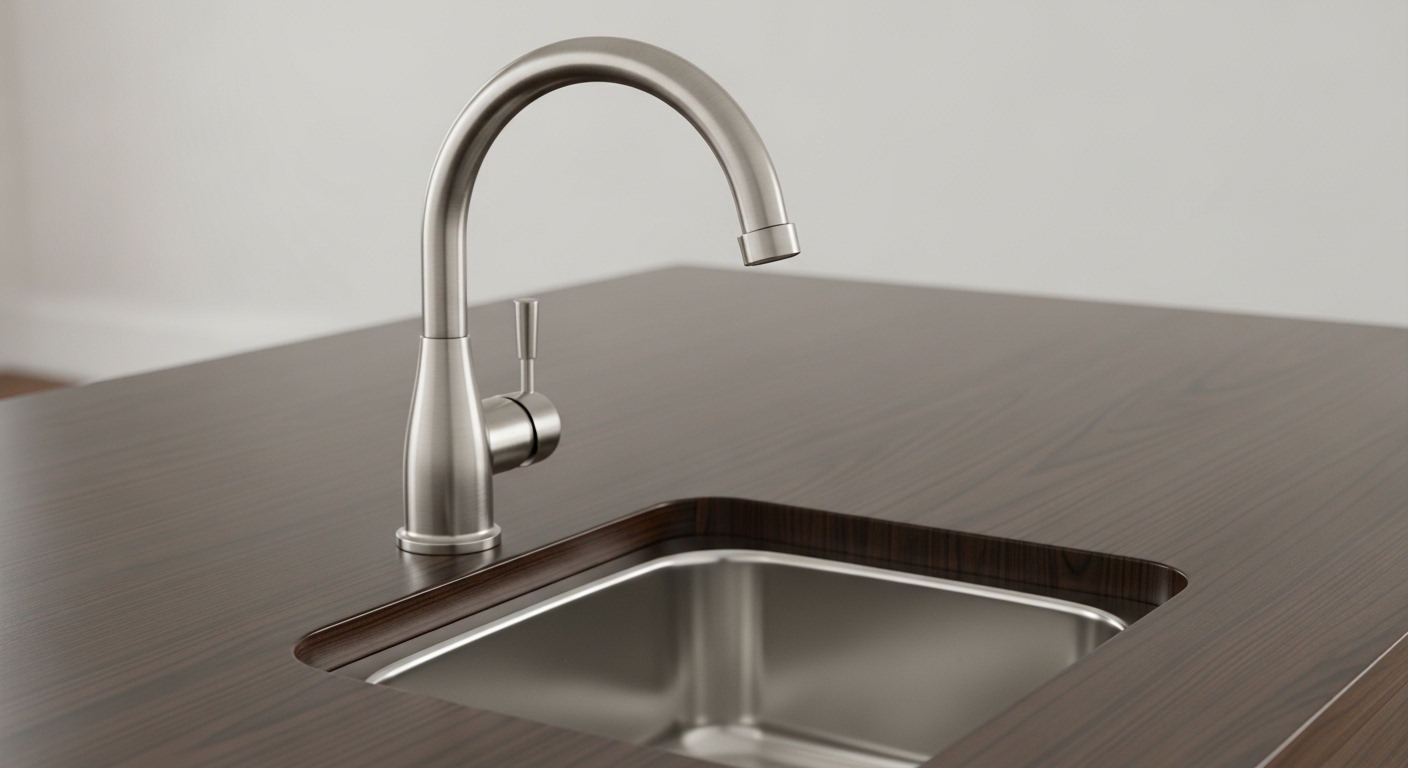
If you’ve been searching for a tap bar table mountain solution, you’re almost certainly trying to mount a small bar faucet through the top of a bar counter, prep table, or beverage station — and you want it to actually fit the hole, reach the sink, and not wobble after a month. “Table mountain” here really means table-mounted (also called deck-mounted or top-mounted): the tap drops down through a hole in the surface and clamps from underneath. This guide breaks down exactly how that mount works, what specs matter, and how to choose one that lasts.
At adeaga, we test and sell bar and kitchen fixtures every day, so we’ll skip the fluff and give you the real numbers — hole sizes, deck thicknesses, thread types, and flow rates — that decide whether your bar tap installs in 20 minutes or turns into a weekend of frustration.
What does “table mountain” actually mean for a bar tap?
“Table mountain” is just a search-engine mangling of table-mounted — a deck mount where the faucet body sits on top of the surface and a threaded shank passes through a drilled hole, secured by a nut and washer from below. It is the most common mounting style for bar and prep faucets because it works on almost any flat surface: laminate, butcher block, granite, quartz, or stainless.
The alternative is a wall-mounted bar tap, where the faucet comes out of the wall behind the bar. Wall mounts look clean but require in-wall plumbing you probably don’t want to open up. For a home bar built on a table or cabinet with a bar sink dropped in, a table/deck mount is nearly always the right call. Here’s how the two compare.
| Mount type | Where it attaches | Best for | Install difficulty |
|---|---|---|---|
| Table / deck mount (single hole) | Through a hole in the bar top | Home bars, prep tables, beverage stations | Easy — 20–40 min |
| Table / deck mount (3-hole widespread) | Three holes 4–8″ apart | Wider bar sinks, two-handle looks | Moderate |
| Wall mount | Rough-in plumbing in the wall | Commercial bars, tile backsplashes | Hard — needs wall access |
For 90% of readers building a home bar or upgrading a small prep station, the single-hole table mount is the answer. It uses one clean 1⅜” (35 mm) hole and hides all the hardware underneath.
Will a bar tap actually fit my table? (Hole size, deck thickness, and clearance)
Yes — a standard bar tap fits almost any table if the surface is between roughly ½” and 2½” thick and you can drill (or already have) a 1⅜” hole. Those two numbers — hole diameter and deck thickness — are what determine fit. Everything else is spout reach and height.
Before you buy, measure these four things on your bar table:
- Deck (surface) thickness: most single-hole bar taps clamp anything from 0.5″ up to about 2.25″. Thick butcher-block bars over 2″ need a faucet with a longer mounting shank.
- Hole diameter: the near-universal standard is 1⅜” (35 mm). A 1½” (38 mm) hole also works with most base plates.
- Behind-the-sink clearance: leave at least 2–3″ behind the sink so the spout and handle don’t hit a wall or backsplash.
- Spout height + reach: a bar sink is small, so a tap 8–12″ tall with a 5–6″ reach keeps the stream centered in the basin instead of spraying the rim.
If your table is a solid-wood slab and you’re nervous about drilling, that’s the same skill as any deck installation — the same clamp-from-below logic covered in our walkthrough on how to install a deck-mounted faucet yourself in under an hour. The hardware differs slightly, but the mounting principle is identical.
Which is the best bar tap for a small home bar under $150?
For a home bar under $150, the best value is a single-handle, single-hole stainless-steel or brass bar faucet with a ceramic-disc cartridge and a 360° swivel spout — expect to pay $60–$130 for a solid one. Skip the ultra-cheap zinc-alloy taps under $40; the bodies corrode and the handles loosen within a year.
Here’s what actually separates a good bar tap from a throwaway one:
- Body material: solid brass or 304 stainless steel lasts. Zinc alloy (“metal” with no spec listed) is the red flag.
- Cartridge: ceramic disc gives smooth, drip-free control and outlasts old rubber-washer designs by years.
- Finish: PVD-coated finishes (brushed nickel, matte black, chrome) resist scratching and won’t peel like cheap electroplating.
- Flow rate: 1.5–1.8 GPM is plenty for a bar sink — high enough to rinse glasses, low enough not to splash.
- Swivel: a 360° spout lets you swing it out of the way to load the sink.
Finish durability is where a lot of budget taps quietly fail. If you’re deciding between finishes, a PVD coating is genuinely worth the small premium — we explain why in our breakdown of whether a matte black PVD faucet is worth it. The same peel-resistance logic applies to a brushed nickel or chrome bar tap.
How do I install a table-mounted bar tap myself?
You can install a deck-mounted bar tap in about 20–40 minutes with an adjustable wrench, plumber’s tape, and a basin wrench. The whole job is: drop the shank through the hole, clamp from below, connect two supply lines, and test. No soldering required if your bar has standard shutoff valves.
Step by step:
- Shut off the hot and cold supply valves feeding the bar sink.
- Set the rubber or silicone gasket over the mounting hole, then lower the faucet shank through it.
- From underneath, slide on the washer and thread the mounting nut up the shank. Align the spout, then tighten.
- Wrap the ½” NPT threads with plumber’s tape and connect the flexible supply hoses to the shutoff valves — hot to hot, cold to cold.
- Turn the water back on slowly and check every connection for drips. Run the tap for 30 seconds to clear air.
If your bar’s supply pipes are older copper stubs coming out of a cabinet wall, make sure they’re in good shape before you connect — a corroded or wrong-length stub is the most common reason a “quick” bar install stalls. Our guide on the copper faucet stub out covers how to check and, if needed, correct those connections so your new tap seats cleanly.
One frequent snag: weak flow after install. If your bar tap trickles once it’s connected, it’s usually a clogged aerator or a half-open shutoff, not a bad faucet. The same diagnostics we lay out for increasing water flow in a kitchen faucet apply directly to bar taps — start at the aerator, then the valves, then the supply lines.
Single-handle or two-handle bar tap — which should I get?
For a bar table, a single-handle bar tap is almost always the better choice: it needs only one hole, mixes hot and cold with one lever, and takes up less of your limited bar-top real estate. Choose a two-handle (widespread) bar tap only if you specifically want a classic look or your sink already has three pre-drilled holes 4″ or 8″ apart.
Single-handle pros: easier one-hand operation when your other hand is holding a glass, simpler install, fewer leak points. Two-handle pros: traditional styling, independent hot/cold feel, and it fills existing 3-hole sinks without a deck plate. If you’re leaning two-handle, understand that the mixing happens at a hidden junction under the deck — the same component we detail in our piece on the widespread faucet tee, which is the hub that quietly makes a two-handle bar tap work.
What specs should I confirm before buying? (A quick checklist)
Before you click buy, confirm five specs and you’ll avoid the two most common returns — wrong hole size and a spout that’s too short or too tall for a small bar sink.
| Spec | What to look for | Why it matters |
|---|---|---|
| Mounting hole | 1⅜” (35 mm), single hole | Matches standard bar-sink drilling |
| Deck thickness range | 0.5″–2.25″ | Must clamp your actual table top |
| Spout height | 8″–12″ | Clears glasses without over-splashing a small basin |
| Spout reach | 5″–6″ | Centers the stream in the sink |
| Connection | ½” NPT, flexible supply lines | Fits standard shutoff valves |
| Cartridge | Ceramic disc | Drip-free, long service life |
Match those and your tap bar table mountain install becomes genuinely plug-and-play. Miss the hole size or the deck-thickness range, and you’re either drilling a bigger hole or shopping for a longer shank.
How long should a good bar tap last, and what about warranty?
A quality solid-brass or stainless bar tap with a ceramic-disc cartridge should last 10–15 years of normal home-bar use, and most reputable brands back the finish and cartridge with a limited lifetime warranty. Cheaper zinc-alloy taps often fail at the base or handle within 1–3 years — the warranty length is a reliable proxy for how much the maker trusts the build.
Look for fixtures that meet recognized plumbing standards — in North America that means NSF/ANSI 61 and 372 (lead-free) compliance, and cUPC/UPC certification. These aren’t marketing badges; they’re independent lab confirmations that the metal is safe for drinking water and the valve holds pressure. At adeaga, we prioritize fixtures with documented lead-free certification and PVD finishes precisely because those are the two areas where budget bar taps cut corners.
FAQ
Does a bar tap need hot and cold water?
Not always. If your bar sink is only for rinsing glasses and filling pitchers, a single cold-water supply is fine and cuts the install in half. But if you’ll wash hands or dishes there, run both hot and cold. Most single-handle bar taps accept both lines and simply mix them internally.
Can I mount a bar tap on a butcher-block or wood table?
Yes. Drill a clean 1⅜” hole, seal the raw edges of the wood with a bead of silicone or polyurethane before mounting, and use the rubber gasket on top. Sealing the hole edge stops water from wicking into the wood and swelling it — the single most important step when table-mounting on butcher block.
What size hole do I drill for a table-mounted bar tap?
1⅜ inches (35 mm) is the standard for a single-hole bar tap. A 1½” (38 mm) hole also works because most faucets ship with a base plate that covers the extra gap. Use a hole saw or a step bit and go slow to avoid chipping the surface.
Why is my new bar tap dripping at the base after install?
A drip at the base is almost always the mounting gasket not seated flat or the mounting nut under-tightened, letting sink water seep down the shank. Shut off the water, snug the nut from below, and confirm the gasket is centered. If the drip is at the supply lines instead, re-wrap the threads with plumber’s tape.
Is a stainless-steel or brass bar tap better?
Both are excellent — the choice comes down to finish and price. Solid brass is easy to plate in any finish (chrome, brushed nickel, matte black) and machines precisely. 304 stainless is naturally lead-free and great for a raw brushed-steel look. Avoid anything simply labeled “metal” or “alloy,” which usually means zinc.
How high should a bar tap be over the sink?
Aim for a spout 8–12 inches tall for a home bar. That’s tall enough to slide a pint glass or pitcher underneath but short enough that the stream doesn’t splash out of a shallow bar basin. If you frequently fill tall vessels, go toward 12″; for a compact prep sink, 8–9″ keeps splashing down.
The bottom line
A “tap bar table mountain” search really means table-mounted bar tap, and the winning formula is simple: a single-hole, deck-mounted faucet in solid brass or stainless, 8–12″ tall, with a ceramic-disc cartridge and a PVD finish, sized to a 1⅜” hole and your table’s thickness. Nail those specs and you get a clean 20-minute install and a fixture that outlasts the bar itself.
Author note: This guide was written by the adeaga fixtures team, who spec, pressure-test, and install bar and kitchen faucets year-round. We base our recommendations on hands-on testing, manufacturer certification data (NSF/ANSI 61 & 372, cUPC), and real installation feedback — not spec sheets alone. adeaga.net supplies bar, kitchen, and bathroom fixtures with a focus on lead-free, warranty-backed hardware.