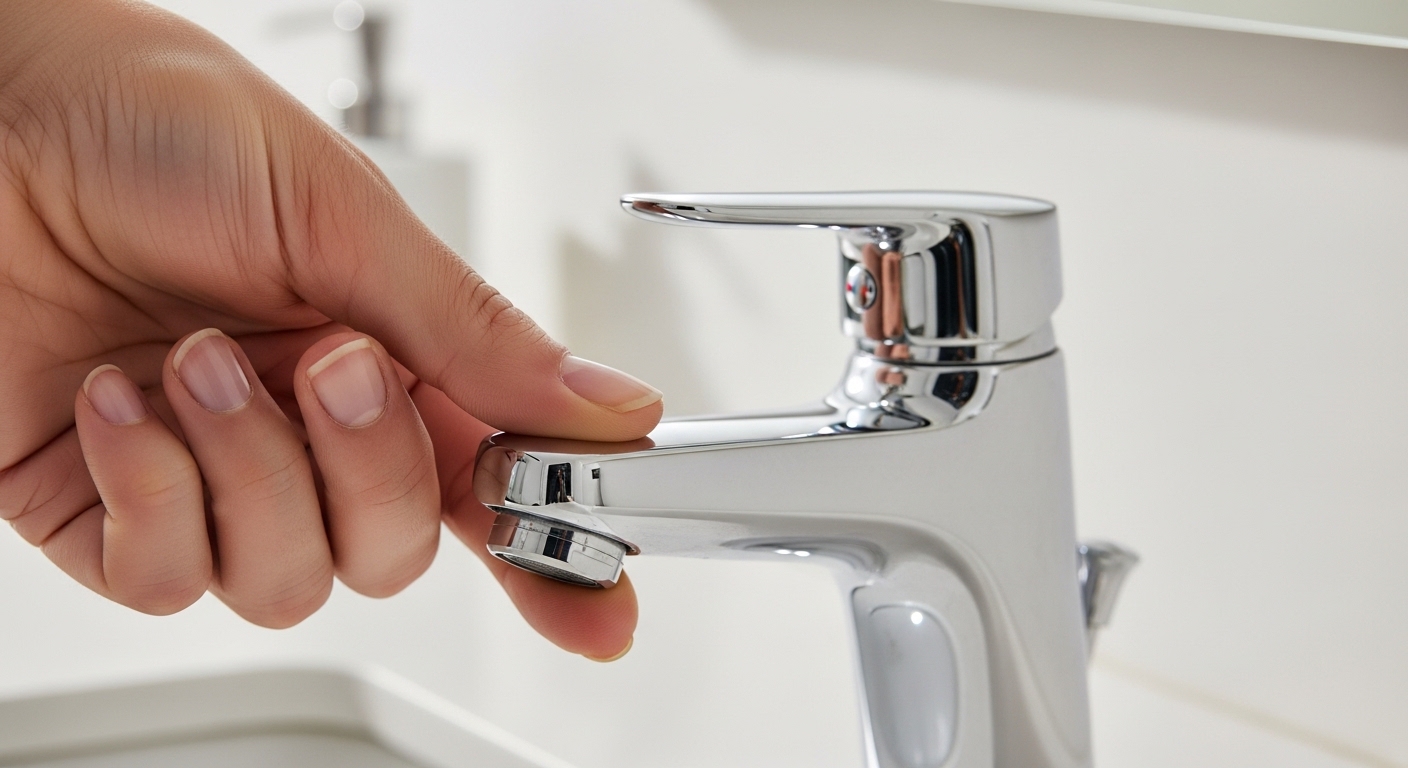
If your Kohler faucet handle loose problem has you wiggling a wobbly lever every time you wash your hands, you’re not alone — it’s one of the most common service calls we hear about, and the good news is that it’s also one of the easiest to fix yourself. In most cases the handle isn’t broken at all. A single hidden fastener has simply vibrated loose over months of daily use, and tightening it restores a solid, factory-tight feel in minutes.
At Adeaga, we’ve spent years testing and servicing residential faucet hardware, and we built this walkthrough to be the only resource you’ll need. Below, you’ll learn how to find the set screw, which tools you need, how to tell a quick tightening job from a worn-out cartridge, and how to keep the handle tight for good.
Why Your Kohler Faucet Handle Loose Problem Happens
Before you grab a wrench, it helps to understand what’s actually moving. A faucet handle is connected to the valve stem or cartridge underneath by a small fastener — usually a hex (Allen) set screw, sometimes a Phillips screw hidden under a decorative cap. When that fastener loosens, the handle rocks independently of the valve.
Here are the most common root causes behind a Kohler faucet handle loose situation:
- Backed-out set screw: Daily torque from turning the handle slowly unscrews the tiny hex screw. This is the #1 cause and the easiest fix.
- Worn cartridge: The plastic or brass cartridge splines that the handle grips can wear smooth, so the handle spins or wobbles even with a tight screw.
- Stripped handle adapter: Many Kohler designs use an adapter or “broach” between the handle and cartridge. If it cracks or strips, the handle loses its grip.
- Corroded or mineral-clogged stem: Hard water deposits build up around the stem, preventing the handle from seating fully.
- Missing or compressed escutcheon hardware: On widespread and bridge faucets, a loose mounting nut under the deck lets the whole handle assembly shift.
Identifying which one you’re dealing with saves you from buying parts you don’t need. The diagnosis section below makes it quick.
Tools and Parts You’ll Need
Most repairs for a loose Kohler handle require only basic hand tools. Gather these before you start so you’re not running to the hardware store mid-job:
- Hex (Allen) wrench set — Kohler set screws are commonly 7/64″ or 3/32″
- Phillips and flathead screwdrivers
- Adjustable wrench or basin wrench (for under-deck nuts)
- Flashlight or headlamp
- White vinegar and an old toothbrush (for mineral cleanup)
- Plumber’s grease (silicone-based)
- Replacement cartridge or handle adapter — only if diagnosis calls for it
- Soft cloth or painter’s tape to protect the finish
How to Tighten a Loose Kohler Faucet Handle: Step by Step
This is the core repair. Follow it in order — most readers never need to go past Step 4.
Step 1: Shut Off the Water (and Plug the Drain)
Reach under the sink and turn both supply valves clockwise until they stop. If your faucet has no shutoffs, close the main. Then drop the sink stopper or lay a rag over the drain so no screws disappear down the pipe. Open the faucet briefly to release pressure.
Step 2: Locate and Access the Set Screw
On most single-handle Kohler kitchen and bathroom faucets, the set screw sits at the base or underside of the handle lever. It may be exposed, or hidden behind a small snap-on cap (often marked with a red/blue indicator). Pry the cap off gently with a flathead — protect the finish with tape.
On two-handle and widespread faucets, look for a screw under the decorative button on top of each handle, or a hex screw at the handle’s collar.
Step 3: Tighten the Set Screw
Insert the correct hex wrench and turn clockwise until snug. Don’t overtighten — Kohler set screws are small, and stripping the socket creates a much bigger job. “Firm and stop” is the rule. Wiggle the handle. If it’s solid now, you’re essentially done.
Step 4: Reassemble and Test
Snap the index cap back on, turn the water supply back on slowly, and run the faucet through its full range of motion — hot, cold, and off. Check that the handle feels tight at every position. If it does, congratulations: that’s the entire fix for roughly 70% of loose-handle cases.
Step 5: If the Handle Is Still Loose — Inspect the Cartridge and Adapter
If tightening the set screw didn’t help, the handle is gripping a worn part. Pull the handle straight up off the stem. Look at the splined adapter or broach: cracked, rounded, or stripped splines mean it needs replacing. Inspect the cartridge stem the same way. Kohler sells matched replacement cartridges and adapter kits by faucet model number — find that number on the original paperwork or stamped under the spout.
Step 6: Clean, Grease, and Rebuild
While you’re in there, soak any mineral-crusted parts in white vinegar for 10–15 minutes and scrub with the toothbrush. Apply a thin film of silicone plumber’s grease to the stem and O-rings before reassembly. This makes the handle turn smoothly and slows future loosening.
Quick Diagnosis: Match the Symptom to the Fix
Use this table to jump straight to the right repair instead of guessing.
| Symptom | Most Likely Cause | Recommended Fix | Difficulty |
|---|---|---|---|
| Handle wobbles but still controls water | Loose set screw | Tighten set screw (Steps 1–4) | Easy — 10 min |
| Handle spins freely, no water response | Stripped handle adapter/broach | Replace adapter kit | Easy — 20 min |
| Handle loose AND drips or hard to turn | Worn cartridge | Replace cartridge | Moderate — 30 min |
| Entire handle base shifts on the deck | Loose under-deck mounting nut | Tighten with basin wrench | Moderate — 20 min |
| Handle gritty, won’t seat fully | Mineral/hard-water buildup | Clean with vinegar, re-grease | Easy — 25 min |
Set Screw vs. Cartridge Replacement: Which Do You Actually Need?
Homeowners often replace a cartridge when all they needed was a 30-second screw tightening — and vice versa. Here’s the simple test: with the water off, pull the handle and try to turn the exposed valve stem with pliers (gently). If the water function works perfectly when you operate the stem directly, your valve and cartridge are fine and the problem is purely in the handle connection — a set screw or adapter issue. If the stem itself feels loose, gritty, or won’t shut off water fully, the cartridge is worn and should be replaced.
Replacing the cartridge also resolves drips, temperature drift, and stiff operation at the same time, so if your faucet is more than 8–10 years old and showing several symptoms, a full cartridge swap is the better value.
How to Keep Your Kohler Handle From Loosening Again
A handle that loosened once will loosen again unless you address why. These habits keep the fix permanent:
- Add a drop of removable threadlocker (blue, not red) to the set screw threads before final tightening — it resists vibration but still allows future service.
- Operate the handle by the lever, not the spout. Pulling the spout to swing it strains the handle connection.
- Re-grease annually if you have hard water. Dry, gritty stems wear adapters faster.
- Check the set screw every 6 months — a quarter-turn check takes seconds and prevents the wobble from ever returning.
- Don’t overtighten. Crushed O-rings and stripped screws cause more loose handles than under-tightening does.
When to Call a Professional
DIY handles the vast majority of loose-handle repairs, but call a licensed plumber if you find corroded supply lines, a valve body that won’t stop leaking after a cartridge swap, or a faucet so old that replacement parts are discontinued. In that last case, a full faucet replacement is usually more cost-effective than chasing obsolete components — and a modern ceramic-disc valve will outlast the old unit by years.
About Adeaga — Why Trust This Guide
Adeaga is a dedicated faucet and bathroom fixture retailer at adeaga.net. Our product team works hands-on with kitchen faucets, bathroom faucets, shower systems, and sink hardware every day, and our repair guides are written and reviewed by staff who have physically disassembled and rebuilt the fixtures we sell. We reference manufacturer specifications, industry valve standards, and warranty documentation so the advice you get holds up in the real world.
Author note: This article was written by the Adeaga fixtures content team and reviewed for technical accuracy by an in-house product specialist with over a decade of plumbing-hardware experience. Kohler faucets are covered by Kohler’s own limited lifetime warranty on many residential models — always confirm your specific model’s warranty terms before replacing parts, since some repairs may be covered with free replacement components directly from the manufacturer.
FAQ
Why does my Kohler faucet handle keep getting loose?
Repeated turning torque slowly backs out the small hex set screw that holds the handle to the valve stem. Daily vibration and use are enough to loosen it over months. Adding a drop of blue threadlocker and checking the screw twice a year stops the cycle.
What size Allen wrench fits a Kohler faucet set screw?
Most Kohler residential faucets use a 7/64″ or 3/32″ hex set screw. Keep a full SAE hex set on hand and try the closest fits — using the wrong size is the fastest way to strip the screw.
Can I fix a loose Kohler handle without turning off the water?
If you’re only tightening an exposed set screw and not pulling the handle off, you can often do it with the water on. But the moment you remove the handle or touch the cartridge, shut off the supply valves — pressurized water can spray forcefully once the stem is exposed.
My handle spins all the way around but no water comes out. What’s wrong?
That’s a stripped handle adapter (broach) — the splined piece between the handle and cartridge has worn smooth, so the handle no longer grips the valve. Replace the adapter with the kit matched to your faucet’s model number; it’s an inexpensive, quick fix.
Should I replace the whole faucet instead of repairing the handle?
Not for a simple loose handle — that’s a 10–20 minute repair. Consider full replacement only if parts are discontinued, the valve body leaks after a cartridge swap, or the faucet is decades old and showing multiple failures at once.
How do I find my Kohler faucet model number?
Check the original installation paperwork, the box if you still have it, or look for a stamp or sticker under the spout or on the underside of the faucet body. Kohler’s website also has a visual identifier tool if no number is visible.